

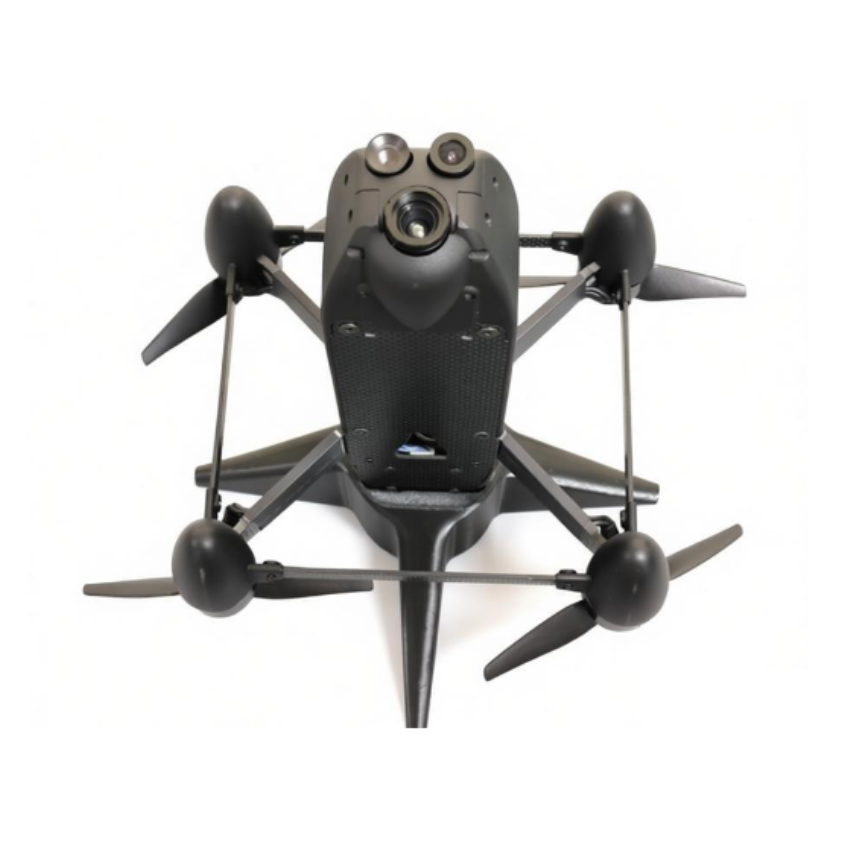


Video Receiver for FPV Drones-VRX433
PRODUCT FEATURES:
1.Stable signal, long transmission range, stronger anti-interference performance in the 433MHz band.
2.Equipped with an omnidirectional antenna, providing comprehensive signal coverage and uninterrupted connection during flight at a range of 1-3 kilometers.
3.Easily mounted on small drones without compromising flexibility or battery life.
4.Stable power and long standby time, transmitting battery voltage, altitude, and other data.
5.Energy saving.
PRODUCT PARAMETERS:
|
Model |
VRX433 |
|
Product name |
Video Receiver for FPV Drones |
|
Frequency band |
433Mhz |
|
Return power |
100mW |
|
Antenna T-type |
Antenna connector IPEX1 |
|
Input voltage |
3.6-5.5V(2S) |
|
Chip |
SX1278+ESP8285 |
|
Weight |
0.8g |
|
Dimensions |
11x22mm |
FAQ:
1.Q: What is image transmission system?
A:An image transmission system captures, processes, and sends visual data from one location to another, often in real-time. These systems range from everyday technologies like television and Wi-Fi to specialized applications like drone video feeds and satellite imaging. They work by converting a visual signal into a transmittable format (e.g., analog or digital), sending it via various media like radio waves, or cables, and then decoding it at the receiving end for display.
2.Q: What are key components and function of an image transmission system?
A: Here are the key components and function of an image transmission system:
- Image capture: A camera or other imaging device captures the visual data.
- Signal processing: The captured data is processed, which may include pre-buffering, coding (like compression), and other electronic adjustments to prepare it for transmission.
- Transmission: The processed signal is sent wirelessly or through a wired connection. This can be done over radio frequencies (like in television or Wi-Fi), or other channels.
- Receiving and decoding: A receiver at the destination picks up the signal, which is then decoded back into a viewable image or video feed on a display.