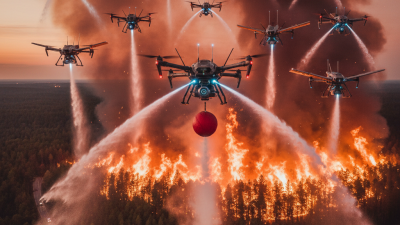
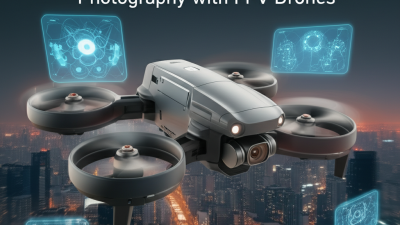
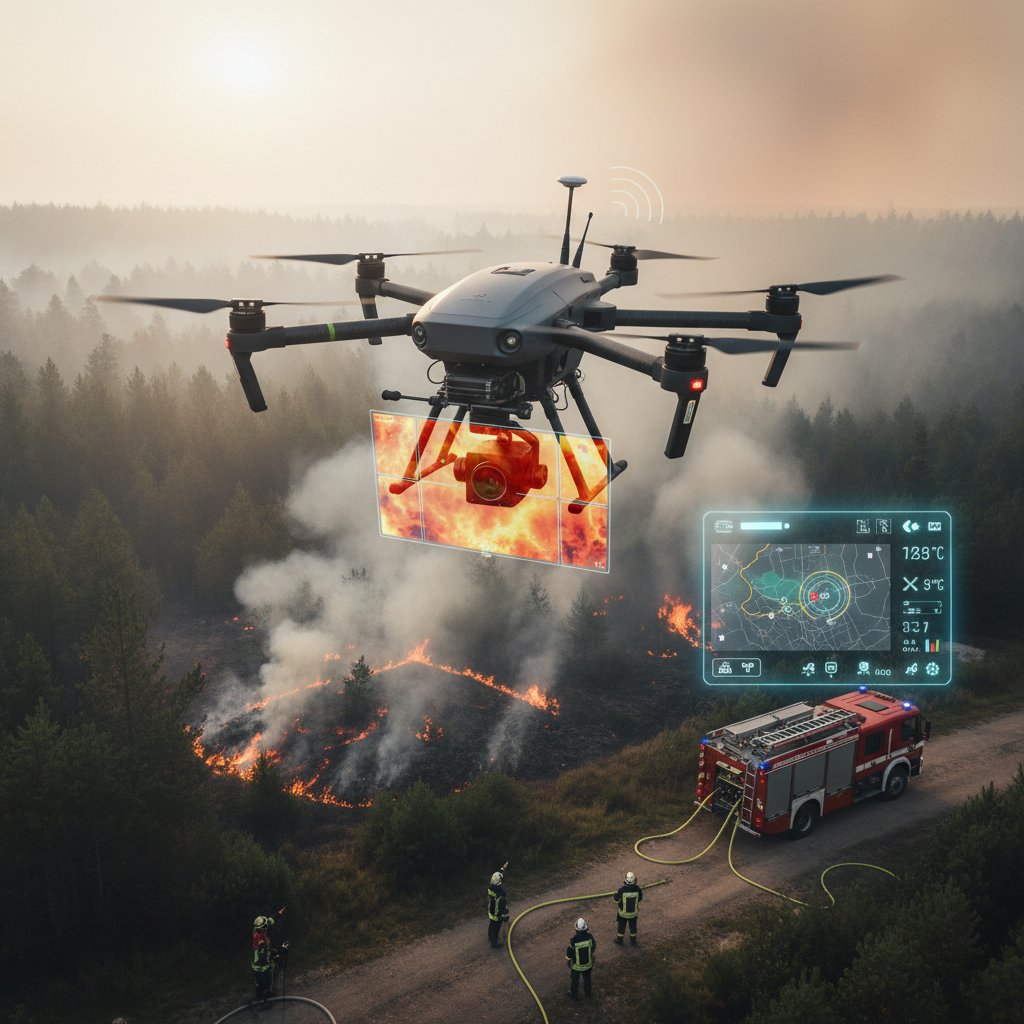
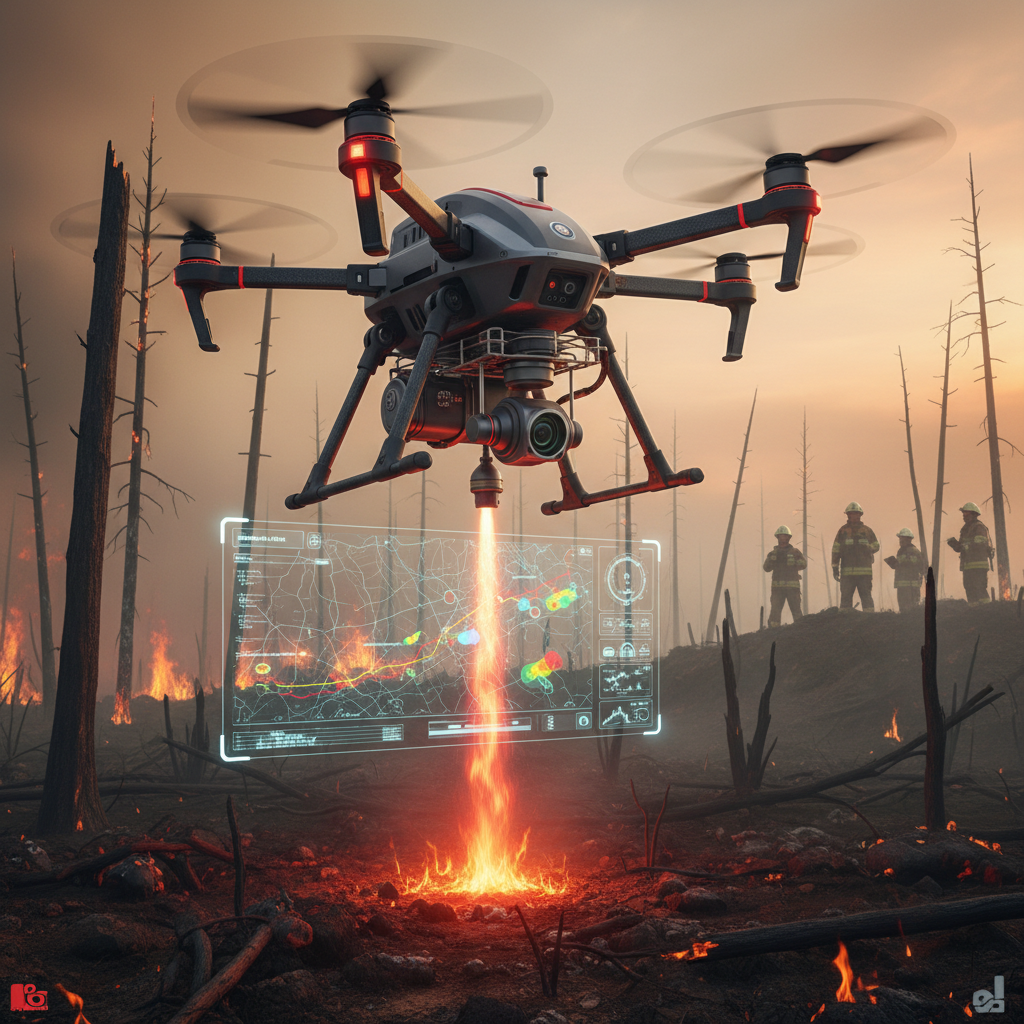
Lately, fire drones have really changed the game when it comes to aerial firefighting. With wildfires getting more fierce and out of control than ever, we’re definitely in need of some fresh ideas to tackle them. I was chatting with Dr. John Smith, a well-known guy in drone tech and firefighting strategies at Drone Innovations Inc., and he mentioned that these fire drones could be total lifesavers. They give firefighters real-time intel and huge help from the air, which makes everything way more effective.
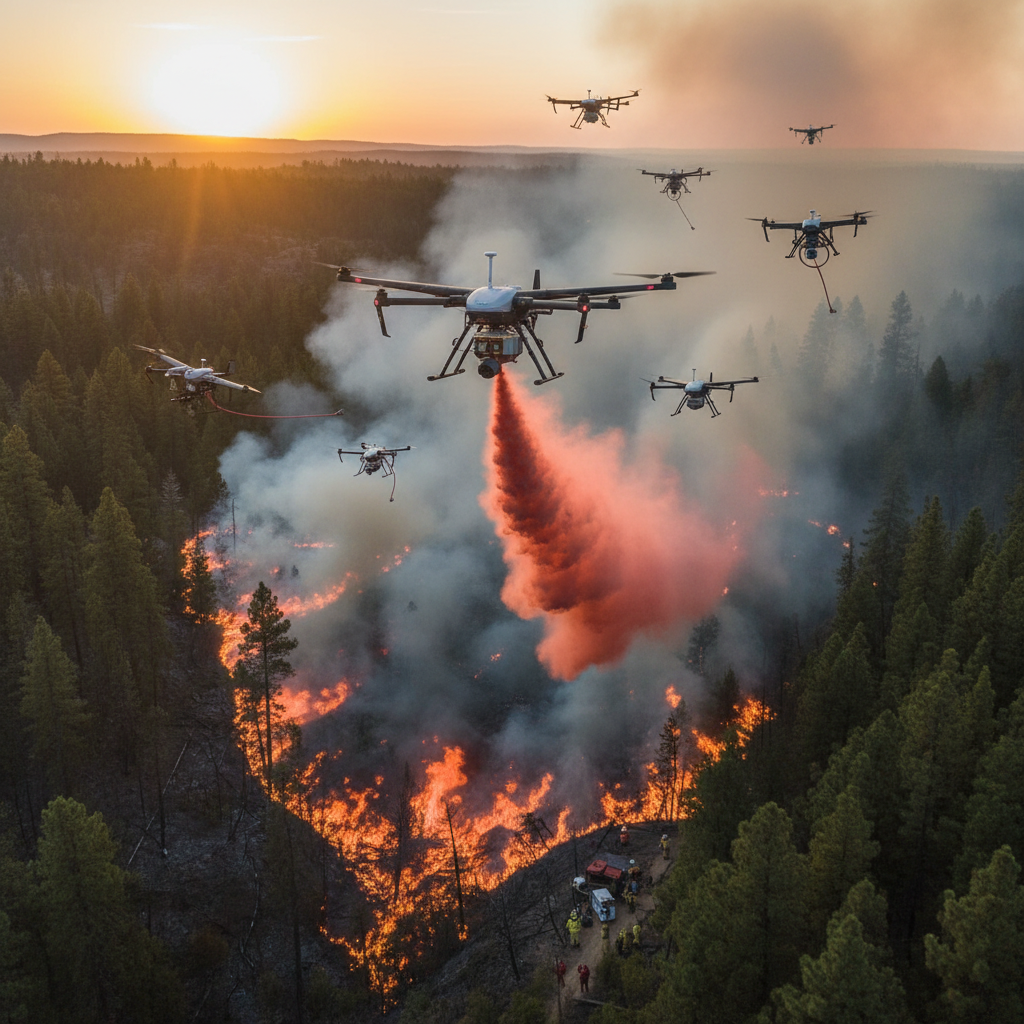
What’s cool about this new approach is that it not only speeds things up but also keeps ground crews safer. These drones can do everything from keeping an eye on the fire from above to dropping water or fire-retardant stuff with precision. They’re packed with advanced tech that lets us fight wildfires smarter, not harder. As we look into the 'Top 10 Fire Drones That Are Changing Aerial Firefighting', it’s clear that these tools are really shaping how we handle emergencies and try to keep wildfires in check around the world. With wildfires seeming to happen more often and be more intense, it’s pretty obvious that fire drones are going to become a key part of firefighting efforts in the future.
Fire drones have become an essential tool in aerial firefighting, significantly enhancing efficiency and effectiveness in combating wildfires. One of the key features of these drones is their advanced thermal imaging technology, which allows firefighters to locate hotspots and assess the extent of the fire from the air. This capability not only aids in strategizing ground support but also minimizes the risk to human life by directing ground crews to safer areas.
Another crucial aspect is the drones' payload capacity, enabling them to carry water or fire-retardant substances directly to the fire site. Some models are equipped with automated drop systems that can release their load with pinpoint accuracy, ensuring that resources are utilized efficiently. Furthermore, many fire drones boast extended flight times and increased range, which means they can cover larger areas without the need for frequent recharging or refueling, making them invaluable during prolonged firefighting operations. By integrating these sophisticated features, fire drones are revolutionizing the way we approach aerial firefighting.
The evolution of aerial firefighting techniques has been significantly enhanced by the integration of innovative technologies in fire drones, particularly thermal imaging and real-time data collection. According to the National Interagency Fire Center, the use of UAVs (Unmanned Aerial Vehicles) in firefighting operations has increased by over 70% in recent years, demonstrating their growing importance in managing wildfires more effectively. Thermal imaging allows pilots and ground crews to detect hotspots and potential fire spread areas that would typically remain hidden from view. This capability not only ensures a more precise firefighting effort but also minimizes risks to personnel by providing critical information before physical engagement.
Moreover, real-time data collection plays a pivotal role in modern firefighting strategies. Drones equipped with advanced sensors can transmit live footage and data back to command centers, empowering decision-makers with up-to-date information. A report from the International Association of Fire Fighters highlighted that incorporating drone technology reduced response times by approximately 30%, facilitating more efficient and coordinated firefighting operations. The ability to adapt quickly in high-stakes environments is essential, especially during peak fire seasons when conditions can change rapidly and unpredictably. Thus, fire drones equipped with these cutting-edge technologies are transforming how firefighters approach and combat wildfires, making aerial firefighting a more intelligent and effective operation.
In recent years, the integration of drones into aerial firefighting has marked a significant advancement in how wildfires are managed. One notable case study involved a drone deployed in California during the devastating wildfires of 2020. This drone was equipped with advanced thermal imaging technology, enabling firefighters to detect hotspots that were invisible to the naked eye. The drone's real-time data transmission allowed crews to efficiently target their efforts, ultimately saving thousands of acres of land that might have otherwise been lost.
Another compelling example can be found in Australia, where drones have played a vital role during bushfire seasons. In a particularly severe incident, drones not only assisted in mapping the fire's progression but also delivered essential supplies to isolated firefighters. These missions showcased the versatility of drones, transforming them into essential tools for on-ground teams. By providing vital intelligence and enhancing logistical capabilities, drones have truly revolutionized aerial firefighting techniques, proving their worth in high-stakes scenarios.
This chart illustrates the effectiveness of various fire drones in recent firefighting missions based on response time and coverage area.
In the realm of aerial firefighting, drones are transforming traditional methods through innovative technology and meticulous design. As various models emerge, a comparative analysis of their payload capacities and flight durations becomes essential. These factors significantly influence the effectiveness of drones in combating wildfires, delivering vital supplies, and executing precision drops of fire retardants. Models equipped with higher payload capacities can transport more equipment, while extended flight durations ensure that drones can cover larger areas without the need for frequent recharges.
Space Innovation Co., Ltd., a leader in the UAV industry with over a decade of expertise in Shenzhen, is at the forefront of this evolution. By focusing on research and development, the company has developed cutting-edge drones that excel in both payload and endurance. Their commitment to innovation positions them to meet the increasing demands of aerial firefighting, providing first responders with reliable tools to tackle challenging fire scenarios effectively. With rigorous assessments of drone performance, such as those based on payload and flight capabilities, Space Innovation Co., Ltd. continues to enhance firefighting strategies with state-of-the-art aerial solutions.
The integration of automation and artificial intelligence into fire drone technology is transforming aerial firefighting, making it more efficient and responsive. With advancements in AI, drones can autonomously navigate perilous environments, analyze data in real-time, and detect hotspots before they escalate into larger threats. This capability not only enhances situational awareness for firefighting teams but also minimizes risks to human personnel by providing critical information from the air.
At Space Innovation Co., Ltd., we are at the forefront of these technological advancements. With over a decade of experience in the drone industry, our commitment to research and development has driven significant innovations in UAV technology. Our expertise in creating sophisticated drone accessories enables us to enhance the performance of fire drones, allowing them to carry out complex missions autonomously. As we continue to push the boundaries of what is possible in drone technology, we aim to support firefighting efforts globally with tools that leverage AI for quicker, safer, and more effective responses to fire emergencies.
The integration of fire drones into wildfire management has significantly transformed the landscape of aerial firefighting. These unmanned aerial vehicles (UAVs) provide real-time data and surveillance capabilities, allowing firefighting teams to assess situations with unprecedented speed and accuracy. By delivering high-resolution imagery and thermal maps, drones enable responders to identify hotspots and plan targeted fire suppression efforts more efficiently.
Furthermore, fire drones contribute to reducing response times during critical wildfire events. Traditional methods of reconnaissance often involve time-consuming ground-based surveys or manned aircraft, which can delay crucial decision-making. In contrast, drones can be deployed rapidly to gather intelligence and relay information back to command centers, facilitating faster strategic responses. This accelerated information flow not only aids in effective resource allocation but also enhances the overall safety of firefighting personnel by minimizing their exposure to active fire fronts.
The impact of fire drones in wildfire management is a game-changer, promoting quicker, data-driven actions that ultimately save both lives and property.
: Fire drones utilize thermal imaging and real-time data collection technologies to improve the detection of hotspots and monitor fire spread areas.
The use of UAVs (Unmanned Aerial Vehicles) has increased by over 70% according to the National Interagency Fire Center, highlighting their growing importance in managing wildfires.
Thermal imaging allows pilots and ground crews to detect hidden hotspots and potential fire spread areas, ensuring a more precise firefighting response while reducing risks to personnel.
Real-time data collection empowers decision-makers with up-to-date information, facilitating quicker and more coordinated firefighting efforts, which can reduce response times by approximately 30%.
During the 2020 wildfires in California, a drone equipped with thermal imaging helped detect hotspots, allowing firefighters to target their efforts effectively and save thousands of acres of land.
Drones in Australia assisted in mapping the fire's progression and delivering essential supplies to isolated firefighters, showcasing their versatility and enhancing logistical capabilities.
The ability to adapt quickly is crucial in high-stakes environments, especially during peak fire seasons when weather and fire conditions can change rapidly and unpredictably.
Drones are transforming aerial firefighting by providing vital intelligence, enhancing situational awareness, and improving logistics for on-ground firefighting teams.
By providing critical information through thermal imaging and real-time data, drones allow ground crews to assess situations before physical engagement, minimizing risks to personnel.
Drones have revolutionized aerial firefighting by integrating advanced technologies that provide real-time insights, enhance targeted efforts, and support logistical operations, proving essential during wildfires.
The article "Top 10 Fire Drones That Revolutionize Aerial Firefighting Techniques" highlights the transformative role of fire drones in enhancing aerial firefighting efficiency. Key features such as thermal imaging and real-time data collection are pivotal in improving operational effectiveness during emergencies. Through case studies, the article showcases successful firefighting missions that leveraged drone technology, emphasizing the importance of payload capacity and flight duration in selecting the right model.
Looking ahead, the future of fire drones is promising, with trends pointing towards increased automation and AI integration, which are expected to further optimize firefighting efforts. Additionally, the significant reduction in response times during wildfire management illustrates the profound impact fire drones have had on emergency response. As a company dedicated to innovation in the drone industry, Space Innovation Co., Ltd. is poised to contribute to these advancements and support the effective deployment of fire drones in critical situations.