Leave Your Message
Looking for the top drone suppliers to connect with global buyers? Well, it’s not just about having a sleek product page. Buyers really want reliable drones, clear specs, and support they can count on. In this guide, we’ll go over some of the leading drone suppliers by asking the practical questions that matter—like, can the drone handle strong winds without wobbling? Will that thermal camera spot someone hiding behind wet vegetation? And, can spare batteries get to the scene quickly enough when time’s tight?
Brands like DJI, Autel Robotics, Skydio, Parrot, and Teledyne FLIR each focus on different things. Some are better for mapping and inspection, while others are built for public safety, infrastructure checks, or search and rescue missions. When you're shopping around, it’s smart to compare things like how long the drone can stay in the air, how accurate its sensors are, whether the software works well with your setup, and if the support and warranty are solid—especially in your region. Words can sound convincing, but what really counts is solid proof from the field.
Dr. Colin Snow, a well-known industry analyst, has a good rule of thumb: “A drone is valuable when you can see real results from it.” Keep that in mind while reviewing suppliers. Ask to see test reports, live demonstrations, maintenance logs, and references. Test the battery life in tough conditions—cold, humidity, whatever’s relevant. And see if the supplier clearly explains firmware updates. No one’s perfect—the best brands might have delays in certain regions or support channels that aren’t super clear. Maybe I’m a bit cautious, but missing these details can end up costing a lot down the line.
The most reputable global supplier isn't always the cheapest—it’s the one that offers reliable hardware, honest info, trained support, and real-world proof of their drones performing under tough conditions. This guide should help you stay disciplined during your search, but still leave room for a little healthy skepticism. After all, in the drone world, it pays to do your homework!
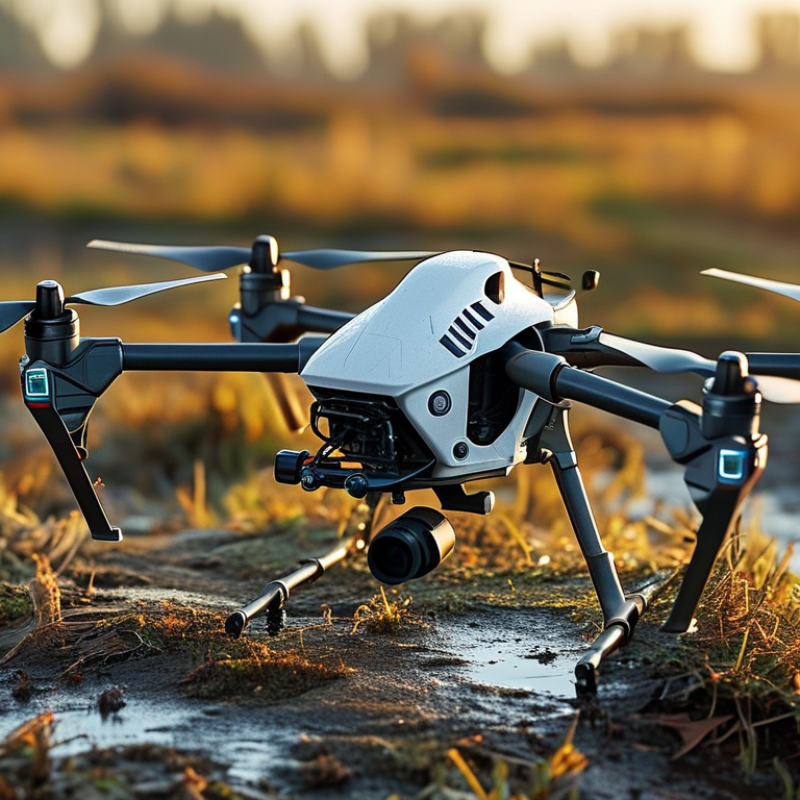
The global drone supplier market is expanding across mapping, agriculture, infrastructure inspection, and emergency planning. Buyers now compare more than flight time. They examine sensor quality, software support, training, spare parts, and export documentation. A reliable supplier should explain operating limits in plain language. Field experience matters here. A machine tested in dry farmland may behave differently near coastal wind or crowded construction sites. This is why global buyers often Search Drone suppliers by region, use case, and service capability.
Market supply is divided among airframe manufacturers, component specialists, software developers, and integrated service providers. Some suppliers focus on compact systems for survey teams. Others build heavy platforms for longer payload operations. Prices vary with cameras, navigation systems, battery design, and maintenance coverage. Buyers should request sample inspection reports, battery-cycle records, and realistic delivery schedules. A polished website is not enough. Technical certificates, transparent warranty terms, and responsive support reveal stronger business practices. Local training partners can also reduce downtime after deployment.
The market still has weak points. Product specifications are sometimes vague, and after-sales service may depend on one distant technician. Procurement reviews often overvalue camera resolution while ignoring data workflow and weather tolerance. That mistake becomes expensive. A careful evaluation should include pilot testing, secure data handling, operator qualification, and compliance with applicable aviation and privacy rules. Suppliers that document limitations, admit uncertainty, and adapt support by country often earn more durable buyer confidence.
| Supplier Region | Common Supplier Categories | Main Product Strengths | Typical Buyer Applications | Regulatory and Compliance Reference | Export Documentation Commonly Requested | Best Fit for Global Buyers |
|---|---|---|---|---|---|---|
| East Asia | OEM manufacturers Component suppliers Platform integrators | Multirotor platforms, camera drones, agricultural aircraft, flight controllers, batteries, gimbals, and replacement parts. Strong availability of configurable products and private-label manufacturing. | Aerial photography, mapping, inspection, crop spraying, logistics trials, public safety, and industrial monitoring. | Importers should verify aircraft registration, radio-frequency compliance, battery transport requirements, and the destination country's operational rules. Lithium batteries are commonly assessed under UN 38.3 transport requirements. | Commercial invoice, packing list, airway bill or bill of lading, certificate of origin, battery UN 38.3 test summary, safety data sheet where applicable, and product specification sheet. | Buyers seeking broad product selection, customization, competitive unit pricing, and scalable production. |
| North America | Enterprise solution providers Surveying specialists Defense and public-safety suppliers | Enterprise-grade airframes, thermal imaging systems, autonomy software, secure communications, payload integration, and professional training services. | Infrastructure inspection, emergency response, surveying, construction, energy utilities, environmental monitoring, and security operations. | In the United States, commercial operations are generally associated with FAA Part 107, including remote-pilot certification and operational limitations. Remote identification requirements may also apply to covered aircraft. | Commercial invoice, end-use statement, technical data sheet, radio compliance information, battery transport documents, warranty terms, training records, and applicable export-control declarations. | Buyers prioritizing professional support, software integration, data security, training, and regulated enterprise deployment. |
| European Union and EEA | Industrial drone developers Mapping suppliers Safety-certified system providers | Surveying aircraft, inspection platforms, mapping payloads, detect-and-avoid systems, remote-identification functions, and specialized software for industrial workflows. | Infrastructure inspection, land surveying, mining, agriculture, construction, public services, research, and environmental assessment. | Operations are commonly assessed under the European Union aviation framework, including open, specific, and certified categories. Product classification may involve C0-C6 marking requirements, CE-related obligations, and national operator registration rules. | Commercial invoice, packing list, declaration of conformity, technical documentation, CE-related records where applicable, battery compliance documents, insurance evidence, and operator or operational authorization records when required. | Buyers needing documented conformity, structured risk management, cross-border European deployment, and industrial-grade traceability. |
| United Kingdom | Commercial drone integrators Inspection specialists Training and operations providers | Inspection drones, thermal and optical payloads, survey systems, operational software, pilot training, and mission-planning services. | Construction, railways, renewable energy, utilities, insurance inspection, agriculture, media production, and emergency services. | Buyers should review UK Civil Aviation Authority requirements, including Flyer ID and Operator ID obligations where applicable. Operational permissions depend on the nature and risk level of the activity. | Commercial invoice, certificate of origin, declaration of conformity where applicable, battery transport documentation, insurance evidence, training certificates, and operating procedures. | Buyers looking for English-language support, compliance assistance, inspection expertise, and service-based deployment. |
| Middle East | System integrators Security suppliers Infrastructure solution providers | Long-endurance systems, thermal payloads, perimeter-monitoring platforms, inspection drones, communications equipment, and fleet-management software. | Oil and gas, ports, border monitoring, construction, smart cities, utilities, infrastructure inspection, and disaster management. | Import and operation requirements vary by country. Buyers should confirm local aviation authority approval, radio-frequency authorization, operator registration, data-storage requirements, and restrictions around airports or sensitive sites. | Commercial invoice, packing list, certificate of origin, end-user certificate, technical specifications, radio compliance documents, battery transport records, and local import permits where required. | Buyers requiring harsh-environment equipment, security integration, long-range operations, and project-based deployment. |
| South Asia | Agricultural drone suppliers Surveying providers Local assembly partners | Crop-spraying aircraft, mapping drones, training packages, maintenance services, and locally adapted systems for agricultural and infrastructure projects. | Precision agriculture, land records, mining, power-line inspection, disaster assessment, construction, and logistics research. | Local registration, import licensing, pilot authorization, payload restrictions, and operation-zone rules should be checked before shipment. Requirements can differ significantly between countries. | Commercial invoice, packing list, certificate of origin, product catalog, battery documents, import license, radio approval, insurance documents, and local authorization records. | Buyers seeking agricultural solutions, regional service partners, lower-cost integration, and market-specific customization. |
| Southeast Asia | Resellers and distributors Agritech suppliers Inspection service providers | Consumer and professional multirotors, agricultural spraying systems, mapping payloads, spare parts, and operator training. | Plantation management, construction, tourism, environmental monitoring, surveying, public safety, and industrial inspection. | Buyers should confirm country-specific aircraft registration, operator permits, flight-zone restrictions, privacy rules, radio approvals, and agricultural chemical-use regulations where spraying is involved. | Commercial invoice, packing list, certificate of origin, battery transport documents, radio certification, pesticide-related approvals where applicable, and local import permits. | Buyers needing regional distribution, tropical-environment support, agricultural applications, and after-sales maintenance. |
| Australia and New Zealand | Remote-area specialists Surveying suppliers Environmental monitoring providers | Long-range inspection platforms, mapping systems, thermal cameras, remote-area communications, and ruggedized accessories. | Mining, agriculture, infrastructure, coastline monitoring, conservation, disaster response, and utilities inspection. | Buyers should review local civil aviation rules, operator accreditation or licensing requirements, airspace restrictions, radio equipment requirements, and rules for flights beyond visual line of sight. | Commercial invoice, packing list, certificate of origin, battery documentation, radio compliance records, insurance evidence, aircraft specifications, and operating approval documents where applicable. | Buyers needing rugged equipment, remote-area reliability, environmental applications, and professional surveying support. |
| Latin America | Agricultural technology providers Mining and mapping suppliers Regional distributors | Agricultural imaging systems, spraying drones, surveying platforms, inspection equipment, and service-based drone operations. | Large-scale farming, forestry, mining, energy, infrastructure development, disaster response, and land surveying. | Registration, pilot licensing, import approval, restricted-airspace rules, privacy requirements, and agricultural-use permits vary by jurisdiction and should be verified before deployment. | Commercial invoice, packing list, certificate of origin, import license, battery transport documents, radio approval, insurance records, and agricultural authorization where applicable. | Buyers targeting agriculture, natural resources, infrastructure projects, and local service partnerships. |
| Africa | Development-project suppliers Agriculture specialists Survey and logistics integrators | Mapping drones, agricultural monitoring systems, medical and logistics trial platforms, inspection equipment, and training services. | Humanitarian mapping, wildlife conservation, agriculture, telecommunications inspection, mining, infrastructure, and medical-delivery pilot programs. | Import and flight permissions are country-specific. Buyers should confirm civil aviation approval, customs requirements, local pilot rules, protected-area restrictions, and permissions for cross-border or beyond-visual-line-of-sight operations. | Commercial invoice, packing list, certificate of origin, end-use statement, battery transport documents, import permit, radio approval, insurance records, and project authorization documents. | Buyers requiring field-service support, mapping capability, conservation applications, agricultural monitoring, and project-based deployment. |
Market note: Product availability, import controls, aircraft registration, pilot licensing, radio-frequency approval, privacy requirements, and operational permissions vary by destination country. Buyers should verify current requirements with the relevant civil aviation, customs, communications, and environmental authorities before placing an order.
: Promotional photos can hide defects. Test frame alignment, camera stability, battery condition, and controller response during a supervised flight. Small defects matter. Ask for batch numbers and inspection records before placing a larger order.
Request documents from issuing authorities, not generic files. Match certificates with the exact model and production version. Review radio approvals, battery transport documents, manuals, and local registration requirements. Requirements can change.
Ask how updates are released, logged, and secured. Confirm whether aircraft store locations, images, or flight records. Request clear data access, deletion, and protection procedures. The answer may remain incomplete.
Check warranty coverage, spare-part availability, repair turnaround, and technical support hours. Contact recent commercial buyers when possible. Written promises are not enough.
Use one spreadsheet for response times, defect rates, minimum orders, lead times, payment terms, and delivery responsibilities. Compare technical answers, not only prices. Cheap can become expensive.
Define the mission, operating environment, flight time, payload, control range, and spare-parts needs. Possible missions include mapping, inspection, agriculture, and training. Vague requirements cause weak comparisons.
No. A video tour can reveal equipment and processes, but independent inspection provides stronger evidence. Request factory photographs, test procedures, production capacity, and recent export references. Remote evidence has limits.
Start with a controlled pilot order. Measure endurance, signal performance, packaging quality, and communication after delivery. Recheck critical documents before expansion. I would still keep some doubt.
The global drone supplier market is expanding as businesses adopt unmanned aircraft for surveying, agriculture, logistics, construction, infrastructure inspection, environmental monitoring, and public safety. When evaluating manufacturers, buyers should consider flight performance, payload capacity, battery life, production consistency, technical support, customization options, pricing, and delivery capability. Leading sourcing regions may offer different advantages in engineering expertise, manufacturing scale, component access, and after-sales service. Buyers should also match drone categories—such as consumer, commercial, industrial, fixed-wing, multirotor, and hybrid systems—with their specific operational needs.
A reliable sourcing process begins with clearly defining the application, operating environment, budget, required features, and target regulations. To verify supplier quality, buyers should review product specifications, testing procedures, certifications, factory capabilities, warranty terms, customer references, and communication standards. Businesses using the keyword Search Drone can compare qualified suppliers, request detailed quotations, evaluate samples or demonstrations, and confirm compliance with import, aviation, privacy, and safety requirements before establishing a long-term partnership.