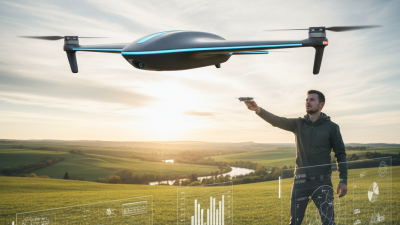
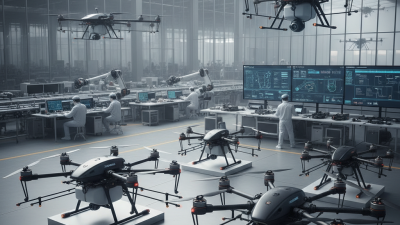
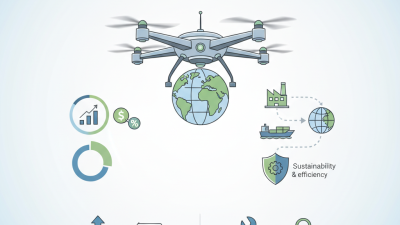
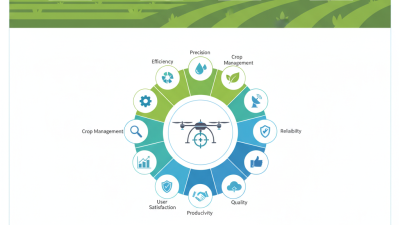
You know, in this fast-paced world of tech, the Commercial Drone industry is really starting to make waves. I remember hearing Dr. Emily Harrington, a top expert in aerial robotics, say that "Commercial drones will totally change the way we handle logistics and deliver services." That really sums up just how big of a role these drones are playing across different fields—whether it’s farms, construction sites, or emergency response teams.
Honestly, the potential for commercial drones? It’s huge. They’re helping companies work more smoothly, cutting costs, and getting things done faster. Take firms like PrecisionHawk and DJI—they’re constantly pushing the envelope to develop solutions that meet the real needs of businesses out there. But, it’s not all smooth sailing. There are definitely some hurdles, like regulations that still need work and the fact that operators often need serious training just to handle these gadgets safely. Staying aware of these challenges will be key if we want to see this market really take off.
Looking ahead to 2026, it’s a good idea for businesses to get familiar with the top commercial drones out there. Knowing what features they offer and how they can be used makes all the difference. Picking the right drone for your industry’s specific needs could be the secret to really making the most of this technology—and I think that’s pretty exciting.
Overview of Commercial Drones in 2026
The landscape of commercial drones is evolving rapidly as we approach 2026. Businesses are increasingly adopting Commercial Uavs across various sectors. These drones provide efficiency and data collection advantages, which were not possible a decade ago. Industries such as
agriculture, construction, and logistics are integrating them into operations. This integration answers many operational challenges, such as reducing costs and improving productivity.
However, not every deployment is flawless. Organizations sometimes struggle with regulatory compliance and technical limitations. The learning curve can be steep.
Training staff to operate these commercial UAVs safely is crucial but often overlooked. Risks associated with privacy and data security can also pose significant challenges. Ensuring all stakeholders understand these aspects is vital for successful implementation.
Companies must prioritize not just the technology, but also the people involved in its use.
As commercial drones become more sophisticated, issues of reliability emerge. The need for regular maintenance and updates is paramount. As the market grows, businesses must stay informed about the latest developments.
A proactive approach to understanding potential pitfalls can be beneficial. Investing time in research and training can yield dividends down the line, making the operation of commercial UAVs a sustainable choice for the future.
Key Features to Consider When Choosing a Commercial Drone
When selecting a commercial drone for business use, several key features come into play. First, payload capacity is vital. Depending on the industry, heavier payloads may be necessary for tasks such as agriculture, construction, or surveying. According to a 2023 report by the North American Drone Association, drones with higher payload capacities can significantly enhance productivity, allowing for the transport of heavier equipment or supplies during operations.
Flight time is another critical feature. Many commercial drones can operate between 20 to 40 minutes on a single charge. However, emerging technologies are extending flight durations. Longer flight times reduce downtime, enabling more efficient workflows. The same report noted that drones with extended batteries increased operational efficiency by up to 25%, especially in delivery and inspection services.
Additionally, consider the drone's range and control capabilities. A drone with a range of 5 miles or more allows operators to cover vast areas, vital for industries like agriculture and monitoring infrastructures. Enhanced GPS and obstacle avoidance features are also important. They provide safety and accuracy, preventing potential accidents or losses. In fast-evolving industries, businesses must reflect on these features critically. As they blend technology with purpose, careful consideration is key to choosing the right drone for specific needs.
The Top 10 Commercial Drones for Different Business Applications
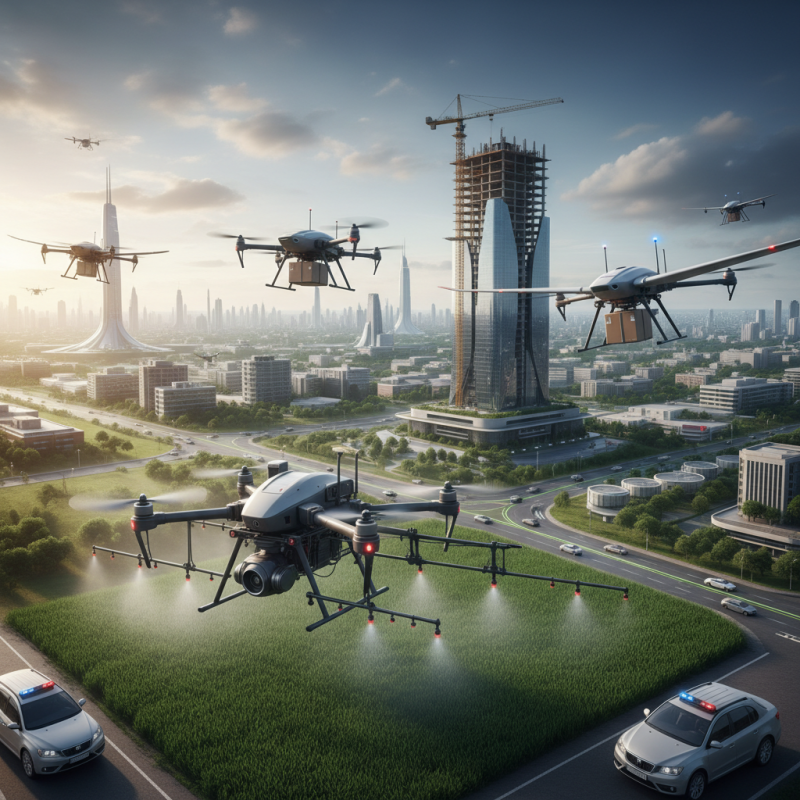
In 2026, commercial drones continue to revolutionize various business sectors. The versatility of Large Commercial Drones makes them essential tools for industries like agriculture, construction, and logistics. For instance, in agriculture, these drones assist in monitoring crop health and optimizing resource usage. Farmers can identify problem areas quickly, reducing waste and increasing yield potential.
In construction, large commercial drones perform site surveys efficiently. They capture high-resolution images and create 3D maps, saving time and enhancing workflow. However, the technology is not without flaws. Some users report that drone navigation systems can struggle in poor weather conditions, leading to project delays. Additionally, managing drone fleets requires training that adds extra costs for businesses.
Within logistics, large commercial drones facilitate last-mile deliveries, providing quicker service to customers. They can navigate urban landscapes but face challenges with regulatory compliance. As businesses integrate these drones, they need to ensure they follow correct protocols. This complexity can sometimes hinder their full potential. Efforts to streamline operations will be crucial in maximizing their effectiveness across all applications.
Comparative Analysis of Drone Performance and Specifications
As the drone market evolves, understanding specifications becomes crucial. Every model offers unique performance metrics. A detailed analysis reveals capabilities that vary significantly. Battery life, flight range, and payload capacity stand out as vital factors. Some units excel in aerial photography, while others prioritize cargo transport efficiency.
In the realm of Commercial Delivery Drones, payload capacity can shape operational success. Models with higher payload capabilities might drive business logistics, but they often have compromises in range. This trade-off needs careful consideration. Maintenance costs can also differ widely, affecting long-term investment decisions. Reliability and ease of use are paramount, yet some drones come with intricate setups and steep learning curves.
Data suggests that user feedback highlights both strengths and weaknesses. Some drones perform well in controlled environments but struggle in adverse weather conditions. Ensuring your choice meets both operational needs and user expectations fosters essential growth. Thus, a detailed comparative analysis is necessary for making informed decisions in the competitive drone landscape.
Top 10 Commercial Drones for Business Use in 2026
Cost-Effectiveness and ROI of Using Drones in Business
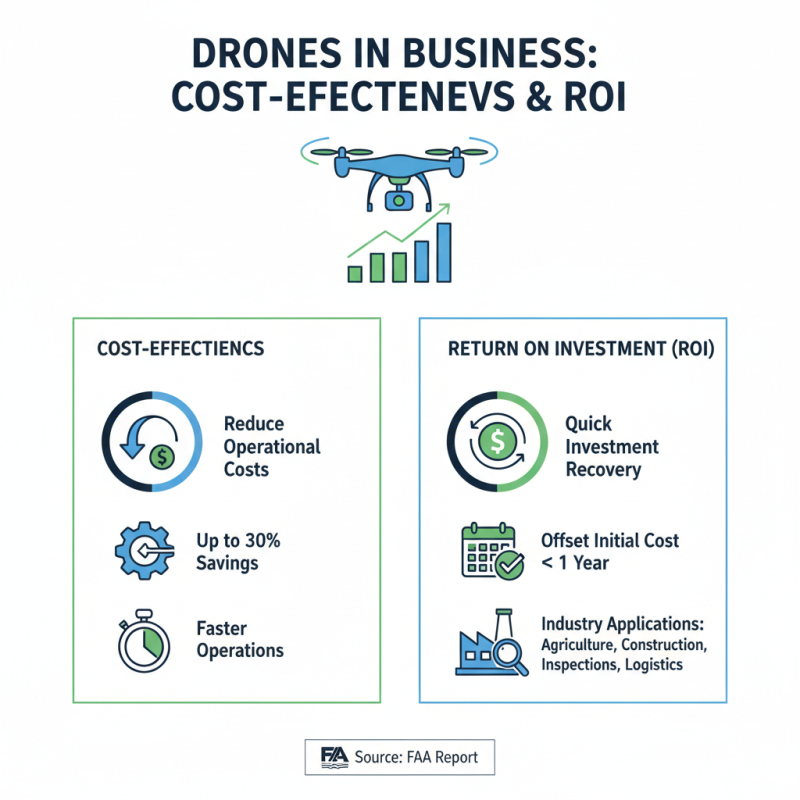
Drones are becoming essential in various industries. Their cost-effectiveness and potential for return on investment (ROI) are key drivers. According to a report by the Federal Aviation Administration (FAA), businesses using drones can cut operational costs by up to 30%. This substantial saving often offsets the initial investment within the first year of use.
Drones provide remarkable efficiency in data collection and delivery. Companies in agriculture report higher crop yields due to precise monitoring. A study by Gartner indicates that drones can improve survey accuracy by over 90%. Yet, not all businesses see the same results. Some struggle with integration, hindering expected gains.
Investing in drones requires careful planning. Training staff is crucial for maximizing their benefits. A report from PwC suggests that companies could see a 10% increase in productivity with thorough training. However, initial training expenses can weigh heavily on smaller businesses. Understanding the potential ROI and addressing these challenges can make drones a worthwhile asset for many industries.
Regulatory Considerations for Commercial Drone Use in 2026
In 2026, regulatory considerations for commercial drone use are crucial. Businesses must navigate a landscape shaped by safety, privacy, and airspace management. Compliance with regulations is not merely optional; it’s essential for sustainable operations.
Understanding local laws is vital. Each region may have distinct rules governing drone flights. It's essential for businesses to conduct thorough research. This can prevent costly fines or operational halts. Businesses should also engage with local FAA representatives to stay updated.
Tips: Always check for updates in regulations. Join industry forums to discuss challenges and share insights.
Interacting with regulatory frameworks can sometimes feel overwhelming. Companies must balance compliance with innovation. Engaging with regulatory bodies may lead to frustrations. Yet, such challenges can also drive better practices.
Tips: Document your experiences. This can aid in refining protocols and ensuring smoother interactions. Continuous learning from regulatory hurdles will support your drone operations.
Future Trends in Commercial Drone Technology and Market Growth
Commercial drones are transforming various sectors, from agriculture to logistics. In 2026, businesses will experience a surge in drone capabilities. Enhanced sensors and AI integration will allow drones to collect more data than ever before. This growth will also drive precision in tasks like crop monitoring and package deliveries.
Emerging trends indicate that regulations will evolve alongside technology. Governments are likely to create more structured airspace management. However, this can lead to challenges for small businesses. Understanding and adapting to these new rules will be critical. The rise of Drone Rc Drone technology poses both opportunities and complexities for users.
Market growth is expected to attract more players, increasing competition. This shift may lead to questions about reliability and safety. Consumers will demand rigorous standards for drone operations. Companies that focus on transparency and quality will stand out. Many businesses may struggle to keep pace with rapid changes.
FAQS
: Commercial drones enhance efficiency and data collection across sectors like agriculture, construction, and logistics.
Yes, organizations often face regulatory compliance issues and technical limitations during implementation.
Training is crucial but often overlooked. Proper training ensures safe and effective drone operation.
Key features include payload capacity, flight time, range, and control capabilities for specific industry needs.
Most commercial drones operate for about 20 to 40 minutes per charge, though some newer models last longer.
Regular maintenance and updates are vital. Neglecting these can lead to operational challenges and reliability issues.
Yes, they facilitate last-mile deliveries, enhancing speed but must comply with regulations.
Enhanced GPS improves safety and accuracy, reducing potential accidents during flights.
Issues may include privacy concerns and data security risks that need careful management.
Streamlining operations and staying informed about developments can boost drone efficiency and prevent delays.
Conclusion
In 2026, the commercial drone market is becoming increasingly vital for various businesses, offering innovative solutions tailored to different applications. This overview highlights key features to consider when selecting a commercial drone, such as flight time, payload capacity, and camera quality. The article dives into the top 10 commercial drones suited for diverse business needs, backed by a comparative analysis of their performance and specifications, ensuring companies can make informed decisions.
Moreover, the cost-effectiveness and return on investment (ROI) of integrating commercial drones into business operations are discussed, showcasing their potential to enhance efficiency and lower operational costs. Regulatory considerations play a crucial role in the deployment of these drones, which businesses must navigate to ensure compliance in an evolving landscape. Finally, insights into future trends in commercial drone technology and projections for market growth underscore the transformative potential this sector holds for various industries.