Leave Your Message
0%

Picking the right Vtol Drone can feel a bit overwhelming, honestly. With so many options out there, it’s super important to make an informed decision — otherwise, you might end up with something that’s not quite what you need. Things like flight time, payload capacity, and how far the drone can go really matter and can influence what’s best for you.

Take a moment to think about what you actually want to do with it. Are you into shooting photos, doing land surveys, or maybe delivering small packages? Vtol Drones come in all sorts of sizes and styles, each with its own set of features. Sometimes, it’s tough to figure out what’s really essential versus what’s just nice to have.

I'd recommend doing a bit of research on different models. Brands like DJI and Parrot are pretty reputable. But keep in mind, what works great for someone else might not be the perfect fit for you. Think about how you plan to use your drone, and don’t feel pressured to rush into buying. Taking your time and choosing wisely will definitely pay off in the long run.

How to Choose the Best Vtol Drone for Your Needs?

Understanding VTOL Drone Types and Their Unique Features

When choosing a VTOL drone, understanding different types is crucial. VTOL drones come in various forms, each serving unique purposes. Traditional multirotor drones excel in vertical takeoff and landing. They are ideal for capturing aerial footage or surveying with precision. However, their flight time can be limited. This can be a drawback for long-range missions.

In contrast, a Vtol Hybrid Drone offers versatility. Combining rotor and fixed-wing capabilities extends flight times significantly. These drones can cover larger areas without needing frequent recharges. Pilots must also consider the payload capacity. Some drones can carry substantial equipment, while others are lightweight. This factor greatly influences their effectiveness for specific tasks.

Choosing the best VTOL drone is not always straightforward. Each type presents challenges and limitations. Understanding your specific needs is essential. For instance, do you prioritize flight duration or camera quality? Balancing these factors can be difficult. Researching various options can help make an informed decision, ensuring you select the right drone for your goals.

VTOL Drone Types and Features Comparison

Identifying Your Specific Use Cases for a VTOL Drone

How to Choose the Best Vtol Drone for Your Needs?

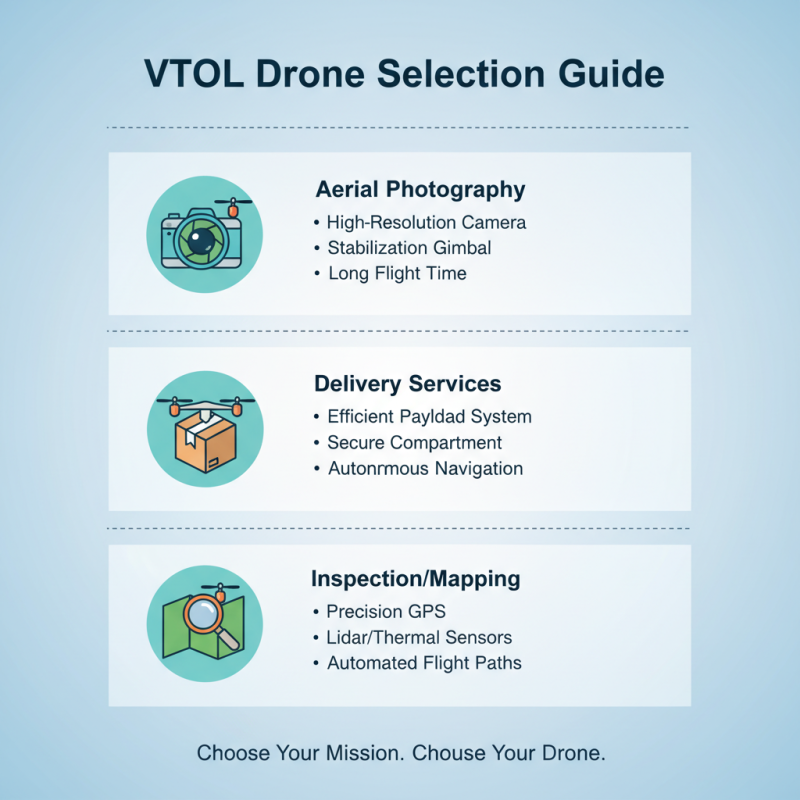
When choosing a VTOL drone, consider your specific use cases. Different applications demand unique features and capabilities. For instance, aerial photography requires a camera with high resolution. Delivery services benefit from drones with efficient payload systems. What do you need your drone to do?

If you are in agriculture, a Vtol Fixed Wing Drone can monitor crop health. Look for one that offers real-time data analysis. Security applications may need drones with thermal imaging. Ensure the model has robust battery life for extended coverage. The terrain you operate in matters too. Urban areas require different capabilities compared to rural settings.

Reflect on your budget and the technology curve. Higher-end models offer advanced features but might be beyond reach. Check the ease of use. A complex setup can be frustrating. Balance between what is needed and what is affordable. Your specific goals should guide your decision. Assess how the VTOL fixed wing drone fits into your operational workflow. Consider these factors carefully to avoid costly mistakes down the line.

Key Specifications to Consider When Selecting a VTOL Drone

When choosing a VTOL drone, key specifications can significantly impact your decision. Consider the drone’s flight time. Longer flight times allow for more extensive operations. Battery capacity plays a role here. High-capacity batteries usually add weight but can extend the time in the air. Think about how much weight the drone can carry. Payload capacity is crucial for different tasks.

Next, examine the control range. A longer range means more freedom to explore. This can enhance your operational capabilities. Look at the drone's stability features. Stability is vital for capturing clear images or conducting surveys. Some models may struggle in windy conditions, which is disappointing.

Finally, assess the ease of use. Some drones come with complex manuals, while others are user-friendly. If the setup is challenging, a learning curve awaits. Make sure it fits your level. Analyze your specific needs. What works for one may not work for another. Understanding these specs can help you find a suitable VTOL drone for your requirements.

Comparing Price Ranges and Budget Considerations for VTOL Drones

When selecting a VTOL drone, budget is a crucial factor. The price range for these drones can vary significantly. Entry-level models may cost around $1,000. Mid-range options often fall between $2,500 and $5,000. High-end drones can exceed $10,000. Understanding where you fit within this spectrum is essential for making a smart choice.

Budget considerations should extend beyond the initial purchase price. Maintenance costs are often overlooked, yet they can add up. For example, routine inspections and part replacements may cost 10-20% of the drone's price annually. Surveys indicate that users underestimate these ongoing expenses. Buyers should also consider insurance options, which can provide financial protection.

There are trade-offs when choosing a VTOL drone. Some cheaper models lack critical features, compromising performance. On the other hand, more expensive options may include advanced technology that some users could find unnecessary. Balancing your needs and budget is a challenging but essential aspect of the decision-making process.

Evaluating Battery Life and Flight Time for Your Needs

When choosing a VTOL drone, battery life and flight time are crucial factors. Long Range Vtol Drones can provide extended flight durations, making them ideal for various applications. A typical battery might last from 20 to 60 minutes, depending on design and weight. It’s essential to consider what you need the drone for. If you plan to fly longer distances, you will want a model that can endure.

It’s easy to overlook the impact of weight on battery life. Adding extra payload can significantly reduce flight time. Think about what equipment you'll carry. A lighter setup often leads to better performance. However, striking a balance is key. Sometimes, sacrificing some features for additional battery capacity is necessary but can be hard to determine.

Flight time also varies based on weather conditions. Windy days can drain batteries faster. Drones flying against strong winds will consume more power. Evaluating your typical flying environment can help you choose wisely. It’s important to reassess your choices regularly. As technology evolves, drone capabilities improve, making it vital to keep updated on new options that fit your needs.

How to Choose the Best Vtol Drone for Your Needs? - Evaluating Battery Life and Flight Time for Your Needs

Drone Model Battery Life (Minutes) Max Flight Time (Minutes) Weight (kg) Payload Capacity (kg)
Model A 30 25 1.5 2.0
Model B 45 40 2.0 2.5
Model C 50 35 1.8 3.0
Model D 40 30 1.2 1.5

Assessing Ease of Use and Pilot Experience Requirements

How to Choose the Best Vtol Drone for Your Needs?

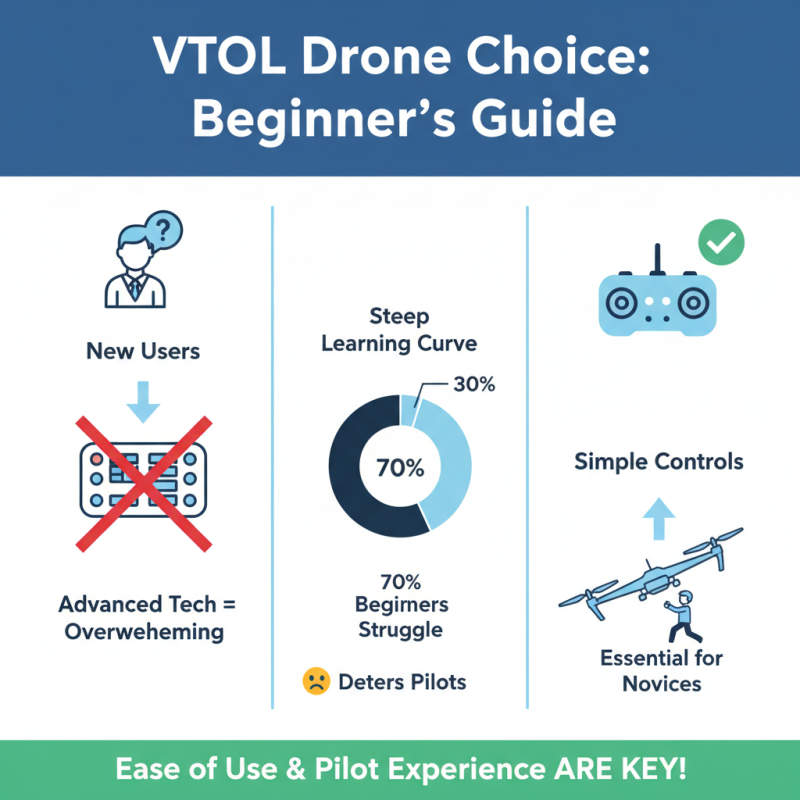
Choosing the right VTOL drone involves evaluating ease of use and pilot experience requirements. Many new users find advanced drone technology overwhelming. Reports indicate that nearly 70% of beginners face a steep learning curve. This could deter potential pilots from engaging with sophisticated options. Simple controls are essential for novice users.

For pilots eyeing more complex models like the 3-Axis Gimbal Vtol Drone, experience is crucial. These drones often require understanding advanced navigation and stability controls. Statistics show that only 30% of users feel comfortable operating drones without prior training. Untrained pilots may struggle with features, leading to operational mistakes. This gap highlights the need for thorough initial training, which can take weeks or even months.

In evaluating ease of use, consider the interface and support resources available. Some drones offer intuitive designs, while others present challenges that can frustrate users. Data suggests that 50% of drone users wish for better tutorials and support. Investing time in understanding technology can prevent regrets later. Reflection on one's skill level is vital before making a purchase.

Researching Brands and Models: Reviews and Recommendations

When researching VTOL drones, understanding brands and models is crucial. Industry reports indicate a growing interest in VTOL technology, with a market expected to reach $10.1 billion by 2028. Users often overlook the specifications that matter. Battery life, payload capacity, and range are essential factors to consider. Some drones excel in maneuverability but falter in battery efficiency.

User reviews can provide valuable insights. For instance, many users report that drones perform well in stable conditions, yet struggle in windy environments. One survey noted that 30% of users experienced issues with GPS accuracy during critical missions. This suggests a need to examine not just performance but also reliability in various scenarios.

Before making a decision, check recent online reviews. They can reveal patterns in user experiences, such as durability and after-sales support. Don't hesitate to delve into community forums; they often highlight hidden issues with specific models. Gathering this data can help in making a well-informed choice that fits your unique requirements.

Maximizing Operational Efficiency with the Long Endurance VTOL Drone: STX18's 12-Hour Flight Time and 18KG Payload Capacity

In today's rapidly evolving technological landscape, the importance of operational efficiency cannot be overstated. The long endurance Vertical Takeoff and Landing (VTOL) drone, with its remarkable 12-hour flight time and impressive 18 kg payload capacity, is revolutionizing various sectors. This drone is not just built for endurance but is designed for versatility, enabling its application across critical areas like large-area surveying, infrastructure inspection, and precision agriculture.

The reliability of these long-range VTOL drones stems from rigorous testing processes that ensure safety and performance. Comprehensive evaluations, including stability and accuracy testing, environmental adaptability assessments, and functional tests, guarantee that these drones meet the highest standards. Moreover, equipped with double security backups for cooperative control, they are prepared to handle complex tasks, ranging from persistent surveillance to critical logistical deliveries such as medical supplies. The enhanced capabilities of such drones enable businesses and agencies to optimize operations, reduce costs, and improve overall productivity in their respective fields.

FAQS

: What factors influence VTOL drone flight time?

: Flight time is largely affected by battery capacity. Higher capacity usually means longer flights, but added weight can be a concern.

Why is payload capacity important?

Payload capacity determines what tasks a drone can perform. Different applications require various weight limits for effective operation.

What is the significance of control range in a VTOL drone?

A longer control range gives you more freedom to operate. It expands your exploration capabilities during missions.

How can stability features impact drone performance?

Stability is crucial for tasks like imaging and surveying. Some drones may struggle under windy conditions, affecting results.

Should ease of use be a priority when selecting a drone?

Yes, user-friendly drones are easier to set up and operate. A complex manual can lead to frustration, especially for beginners.

How can I assess user experiences with drones?

User reviews provide valuable insights. Look for patterns in performance and reliability across different conditions.

What common issues do users face with VTOL drones?

Many users report GPS accuracy issues during critical missions. This highlights the importance of examining reliability before purchasing.

Why should I check community forums?

Community forums can reveal hidden problems with specific models. Engaging with users can provide practical information.

Can a drone's performance vary with environmental conditions?

Yes, drones may excel in stable conditions but struggle in adverse weather. This variability is important to consider for effective use.

What should I focus on when researching models?

Focus on crucial specifications like battery life, payload capacity, and control range. Understanding these can lead to better-informed decisions.

Conclusion

When selecting the best VTOL drone for your needs, it's essential to understand the various types of VTOL drones and the unique features they offer. Identifying your specific use cases will guide you in narrowing down your options. Consider key specifications such as payload capacity, range, and camera quality, which will impact the drone's performance for your intended applications.

Additionally, budget considerations play a significant role, as prices for VTOL drones can vary widely. It’s important to assess battery life and flight time to ensure the drone meets your operational requirements. Ease of use and the level of pilot experience required should also be evaluated, especially for those new to flying drones. Finally, conducting thorough research on different brands and models through reviews and recommendations will help you make an informed decision, ensuring you choose the right VTOL drone for your specific needs.
Alyssa

Alyssa

Alyssa is a dedicated marketing professional at Space Innovation Co., Ltd., a pioneering company in the drone industry based in Shenzhen. With over a decade of experience in research and development, manufacturing, and sales of unmanned aerial vehicles (UAVs) and drone accessories, she possesses an......
Previous Exploring the Future of Search Drones: Innovations Transforming Aerial Technology in Modern Research