Picking the right drone battery charger can really make a difference in how your flights go. A good charger isn't just about charging quickly; it’s also about keeping your batteries healthy and working efficiently for longer. With so many options out there, it can be a bit overwhelming to figure out what’s best, right? That’s why understanding what features to look for is pretty important.
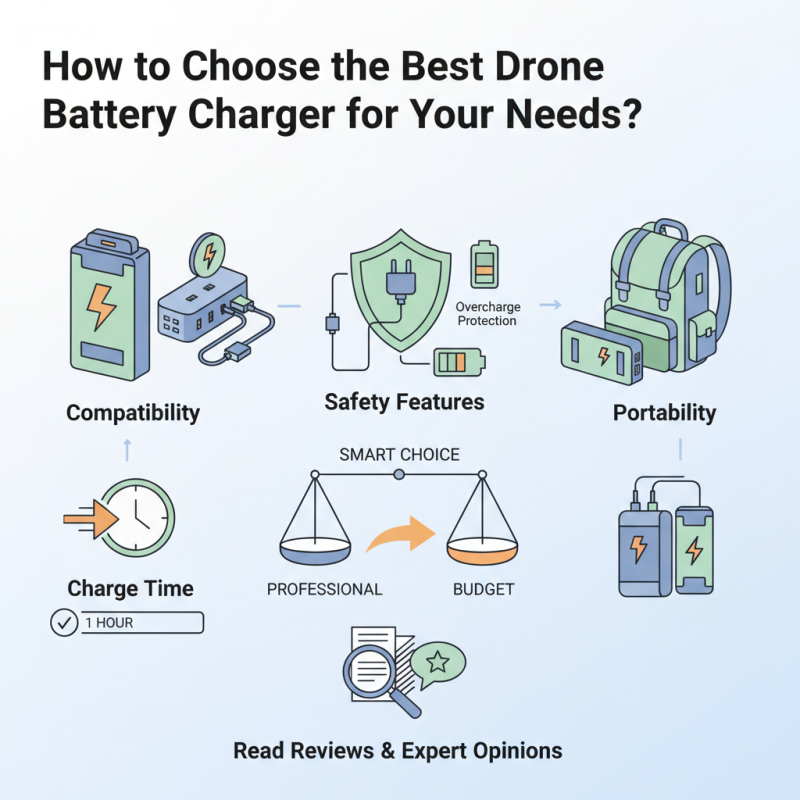
When you’re choosing a charger, first off, make sure it’s compatible with your drone. Not all chargers work with every model, so double-check those battery specs. Charging times matter too—some chargers can get your batteries back in the air in under an hour, while others might take a bit longer. And don’t forget safety features like overcharge protection—they’re super important.
If you’re always on the go, portability is a big plus. A lightweight, easy-to-carry charger can be a game changer for travel plans. But here’s the thing—just because a charger is expensive doesn’t automatically mean it’s the best. Reading reviews and maybe asking some fellow pilots or experts can really help you make a smart choice. When you take all these factors into account, you’ll be way more confident in picking a charger that actually fits your needs and keeps your flying experience smooth and fun.
Understanding Drone Battery Types and Their Charging Requirements
Choosing the right drone battery charger starts with understanding battery types and their specific needs. Lithium-polymer (LiPo) batteries are the most common in drones. They require careful monitoring during charging to prevent damage. According to data from the Drone Flight Times Report 2023, over 70% of drone users utilize LiPo batteries for their reliability and energy density.
Charging requirements vary based on the battery's configuration. A common type, 3S (three cells in series), needs a charger designed for its voltage and current ratings. Many chargers offer balancing features, crucial for longevity. In a survey by Drone User Insights, nearly 60% of drone operators reported an increase in battery lifespan after using a balance charger, highlighting its importance.
Despite advancements, challenges remain. A significant number of users still rely on generic chargers, risking damage to their batteries. The power output may not align with battery specifications, leading to overheating or reduced performance. Understanding these variables can enhance safety and efficiency but requires ongoing education in evolving technologies. Regularly reviewing battery health and charging habits is essential for optimal performance.
Key Features to Look for in a Drone Battery Charger
When selecting a drone battery charger, consider key features. The compatibility with your drone model is crucial. Not all chargers work with every battery type. A reliable charger must match the voltage and specifications of your Drone Battery And Charger.
Charging speed is another essential factor. A faster charger can significantly reduce wait times, allowing for more flight time. Yet, high-speed charging may affect battery lifespan. It's important to strike a balance between speed and battery health. Look for chargers with smart technology. They can automatically adjust charging rates based on battery needs, enhancing longevity.
Safety features should never be overlooked. Overcharge protection, temperature control, and short-circuit prevention are vital. These features help maintain safety during charging. Always read user reviews to gauge performance. Some chargers may overheat or fail to deliver as promised. Researching can save you from potential headaches down the line. Find one that offers a mix of speed, safety, and reliability to meet your needs efficiently.
How to Choose the Best Drone Battery Charger for Your Needs? - Key Features to Look for in a Drone Battery Charger
| Feature |
Description |
Importance |
Considerations |
| Charging Speed |
Time taken to fully charge the battery |
High |
Look for chargers with fast charging capabilities |
| Compatibility |
Works with multiple battery types |
High |
Ensure charger supports your battery model |
| Safety Features |
Overcharge protection, temperature control |
Critical |
Prioritize chargers with built-in safety mechanisms |
| Portability |
Size and weight for travel |
Medium |
Consider lightweight options for easy transport |
| Display Indicators |
LED indicators for charge status |
Medium |
Useful for monitoring charging progress |
| Warranty |
Length and terms of warranty coverage |
Medium |
Look for chargers with a solid warranty policy |
Importance of Charge Time and Battery Cycle Life
When selecting a drone battery charger, understanding charge time is crucial. Fast charge times can enhance your flying experience significantly. A quicker turnaround means more flight opportunities in a shorter period. On average, most drone batteries take 60 to 90 minutes to charge fully. Yet, faster models can manage it in under 30 minutes. However, fast charging may lead to excess heat, which can harm battery lifespan. This risk highlights the need for balanced charger choices.
Battery cycle life is another essential factor. A typical lithium polymer battery can endure approximately 300 to 500 cycles. Research indicates that proper charging protocols can extend this life. Using an intelligent Drone Charger helps maintain battery health by preventing overcharging. Regular maintenance practices can also minimize degradation. Many users overlook how environmental factors, like temperature, impact performance.
Being aware of both charge time and cycle life fosters an informed decision. Choosing the right drone charger is vital for ensuring enduring performance. Knowledge and attention to detail lead to better flight experiences. Balancing speed with battery health demands careful consideration.
Evaluating Charger Output Voltage and Amperage for Efficiency
When choosing a drone battery charger, understanding output voltage and amperage is crucial for efficient charging. Chargers typically operate at various voltages such as 3.7V, 7.4V, and 11.1V, depending on the battery type. A misaligned voltage can lead to reduced battery life or, worse, damage. For instance, a 2022 report from Drone Industry Insights indicates that 40% of battery issues stem from improper voltage settings.
Amperage plays a key role as well. Chargers rated at higher amperage can charge batteries faster. Many experts recommend chargers with an output of at least 2A for optimal charging times. However, a charger with a very high amperage might not be suitable for all batteries. It can produce heat, causing cells to degrade quicker than expected. As per a study by Battery University, overheating can shorten battery life by up to 30%.
Selecting the right combination of voltage and amperage requires careful consideration. Users often overlook the specific requirements of their batteries. Detailed knowledge of battery specifications is essential. A mismatch can lead to inefficiency and potential hazards. Balancing efficiency and safety is vital for maintaining battery performance over time.
Safety Features and Certifications in Drone Battery Chargers
When selecting a Drone Battery charger, safety should be a priority. A charger with the right safety features can prevent potentially hazardous incidents. According to a recent industry report, 35% of drone battery-related accidents are linked to improper charging. Look for chargers with built-in protections such as over-voltage and over-current safeguards. These features help ensure that your drone battery charges safely and efficiently.
Certifications also play a key role in the reliability of drone battery chargers. Chargers that meet standards like IEC or UL are tested for safety. A recent survey found that 70% of users prefer certified products, as they provide peace of mind. It's crucial to verify that the charger you choose holds these certifications. This step reflects your commitment to safety and the longevity of your drone battery.
Moreover, while focusing on safety features, keep in mind that some chargers may lack comprehensive user guidelines. This can lead to misuse. Always take the time to read the manufacturer’s instructions fully. Continuous learning about the best practices for charging can enhance your experience and reduce risks associated with drone battery usage.
Drone Battery Charger Safety Features Comparison
Comparing Smart Charging Technology vs. Standard Chargers
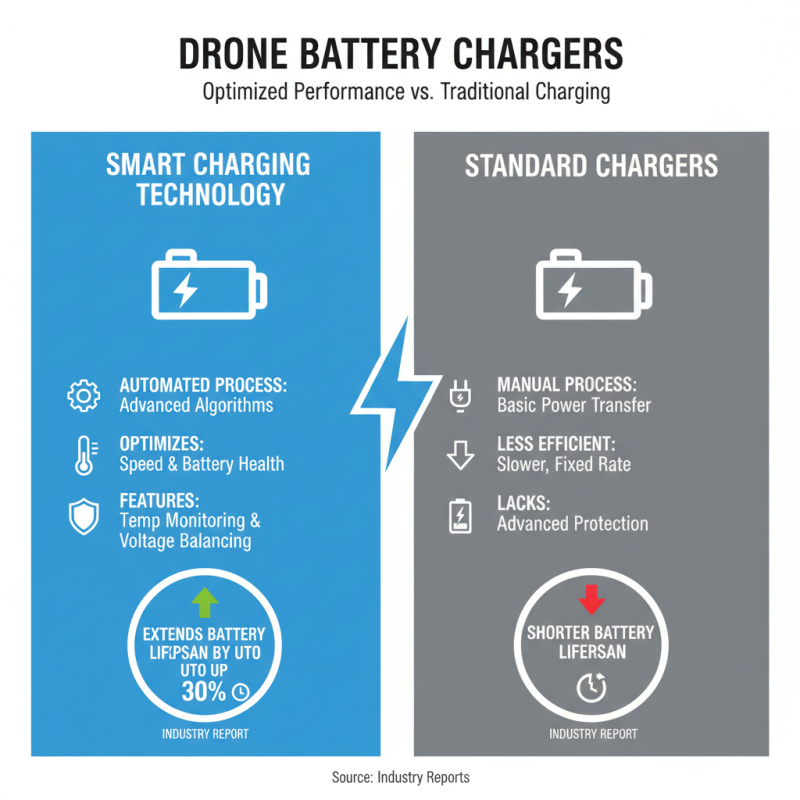
When selecting a drone battery charger, understanding the differences between smart charging technology and standard chargers is essential. Smart chargers automate the process using advanced algorithms to optimize charging speed and battery health. They often employ features like temperature monitoring and voltage balancing. According to industry reports, smart chargers can extend battery lifespan by up to 30% compared to traditional options.
Standard chargers, on the other hand, are simpler and more affordable but lack these enhancements. They usually offer a basic charging function without the intelligence to monitor battery conditions. Relying on a standard charger might be convenient, but it can lead to overheating and reduced battery performance over time. For FPV Drone Battery users, the quality of charge is crucial for ensuring optimal flight time.
Tip: When choosing a charger, assess your FPV drone's battery specifications. Ensure the charger matches voltage and capacity requirements.
Consider investing in a smart charger if you regularly fly. The additional upfront cost can lead to long-term savings due to less frequent battery replacements. Regular maintenance checks on battery health can help avoid unexpected downtimes too. Keep in mind, while smart chargers may be more efficient, they are not infallible. Always monitor your charging setup for any anomalies.
Budget Considerations: Finding the Right Charger for Your Needs
Selecting the right drone battery charger involves careful budget considerations. Reports indicate that drone enthusiasts often underestimate the price range for chargers. Basic options may start around $20, while high-performance chargers can exceed $200. This wide gap highlights the importance of assessing your specific needs before making a purchase.
Consider features that align with your flying habits. Fast charging capabilities can save time but may come at a higher cost. A study by the Drone Industry Association found that over 40% of users prioritize quick charging options. Additionally, look for chargers compatible with multiple battery types. This versatility can be beneficial, especially for users who own different drone models. Investing in such a charger may require a larger initial investment, but it can pay off in the long run.
It’s essential to weigh the benefits of each charger against its price. While cheaper models can be tempting, they may lack safety features. The risk of overcharging is higher with lower-cost chargers. Balancing cost and safety is crucial for every drone operator. Take the time to research and compare options. A charger is an investment in your flying experience.
FAQS
: Check compatibility with your drone model first. Not all chargers fit every battery type.
Faster charging reduces wait time for flights. However, it may harm battery lifespan if too quick.
Look for overcharge protection, temperature control, and short-circuit prevention in your charger.
Most batteries charge in 60 to 90 minutes. Some fast models can do it in less than 30 minutes.
Lithium polymer batteries last about 300 to 500 cycles. Proper care can extend their life significantly.
Mismatched voltage may damage the battery. Different batteries require specific voltage ratings.
Higher amperage chargers fill batteries faster, but excessive heat can degrade battery cells quickly.
Fast charging generates heat, which can harm the battery's longevity. Balance speed and battery health is necessary.
Temperature variations can affect how well batteries charge and how long they last.
Reading reviews can reveal performance issues like overheating or inefficiencies that may not be apparent initially.
Conclusion
Choosing the right drone battery charger is crucial for optimizing your drone’s performance and ensuring longevity. It starts with understanding the various types of drone batteries and their specific charging needs, as these factors will influence your choice of charger. Key features to consider include the charger's output voltage and amperage to guarantee efficient charging, as well as ensuring the charger has the appropriate safety features and certifications.
Additionally, the importance of charge time and battery cycle life cannot be overlooked, as they impact your drone's operational efficiency. Evaluating the benefits of smart charging technology compared to standard chargers can also enhance your charging process. Finally, budget considerations should guide you to find the right drone battery charger that meets both your financial constraints and performance requirements.