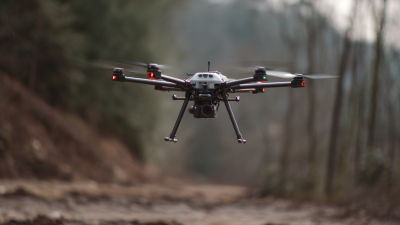
As we get closer to the 139th Canton Fair in April 2026, it's clear that the buzz will be all about cutting-edge tech. One thing that's really catching people's attention lately is the so-called 'Mini Surveillance Drone.' These tiny drones are surprisingly powerful and versatile, making them suitable for all kinds of industries. Recent market reports show a pretty impressive growth of around 22% in the surveillance drone world—definitely a sign that there's solid demand for innovative aerial gadgets.
Adding AI tech into the mix at the fair will make things even more exciting for visitors. Attendees will have the chance to use AI to more easily navigate the vast venue, which spans about 1.55 million square meters—yeah, it’s huge! This could open up some great opportunities for companies that are into Mini Surveillance Drones. But at the same time, folks should be mindful of how quickly the market is shifting. Striking the right balance between cost and performance is going to be super important for buyers.
Big names like DJI and Parrot are expected to roll out their latest models—making this event a must-attend for industry insiders. Of course, while all this tech is exciting, it’s worth thinking about the bigger picture, including the ethical stuff. The market’s evolution brings loads of opportunities, but it also ramps up the challenges—stuff that needs careful consideration for everyone involved.

The global market for mini surveillance drones is experiencing rapid growth. Recent reports indicate a projected CAGR of 25% from 2023 to 2030. This surge is driven by several factors, including advancements in technology and increased security concerns. Mini drones offer discrete monitoring capabilities. Their size allows easy deployment in various environments.
In urban areas, the need for surveillance is paramount. As cities expand, so do the challenges of security. Mini drones can access hard-to-reach locations, providing real-time data. An estimated 40% of urban planners are now integrating drone technology into their security measures. This trend reflects growing confidence in drone efficiency and effectiveness.
Despite the benefits, challenges remain. Privacy concerns persist, particularly in populated regions. Regulations are still catching up with the speed of innovation. Many users grapple with legal limitations on drone use. These factors present a need for clearer policies and responsible usage. Ongoing dialogue between manufacturers, users, and regulators is crucial. This will shape the future landscape of mini surveillance drones.
Mini surveillance drones are gaining traction, especially at events like the 2026 Canton Fair. Their compact size makes them easy to deploy. Users appreciate this convenience when monitoring vast areas. Capture high-resolution images with cutting-edge cameras. This feature offers unmatched clarity, even in low light.
Battery life is another vital aspect. Some mini drones run for up to 30 minutes. This offers better coverage without constant recharging. However, some users find this still insufficient for longer surveillance tasks. The compact design allows for versatility. Users can navigate tight spaces where larger drones can’t fit. Still, this smaller size might limit their wind resistance.
These drones often come with user-friendly controls. Beginners find it easy to learn. Yet, mastering all features takes practice. Some users notice a steep learning curve when switching to advanced modes. The Mini Drone Kit typically includes accessories that enhance functionality. Users have the opportunity to customize their setups. It’s exciting, but can also be overwhelming for newcomers.
| Feature | Description | Benefits |
|---|---|---|
| Compact Size | Designed for easy portability and deployment in various environments. | Allows for discreet operation and reduces the likelihood of detection. |
| High Definition Camera | Equipped with 4K or higher resolution cameras for clear imaging. | Enhanced image quality for better surveillance and analysis. |
| Extended Flight Time | Capable of operating for 30 minutes or more on a single charge. | Increased coverage area and reduced need for frequent recharging. |
| Real-Time Streaming | Live video transmission to monitoring devices. | Immediate access to critical information for decision-making. |
| Autonomous Navigation | Features GPS and obstacle avoidance for safe flight. | Reduces operator workload and enhances safety during missions. |
The rise of mini surveillance drones is transforming the security sector. Recent reports suggest that the global drone market in security is projected to reach $16 billion by 2026. Mini drones are becoming a staple for surveillance due to their small size and maneuverability. They can access tight spaces and monitor areas that traditional cameras cannot. For example, they can easily fly into buildings or around corners, capturing real-time footage.
Mini Spy Drones play a crucial role in various settings. In urban environments, they can enhance public safety by monitoring crowded areas. This technology is being adopted by law enforcement agencies to deter crime effectively. By employing mini drones, they can gather critical data without disrupting citizens. However, ethical concerns arise as privacy issues take center stage. The balance between security and individual rights remains a topic of debate.
Certain studies show that 70% of security professionals believe mini drones improve surveillance effectiveness. Yet, there are challenges. Battery life and flight time are limited, often requiring quick recharges. Furthermore, training personnel to operate these devices effectively can be time-consuming and costly. It's essential for businesses to continuously evaluate the impact and effectiveness of this technology in the field.
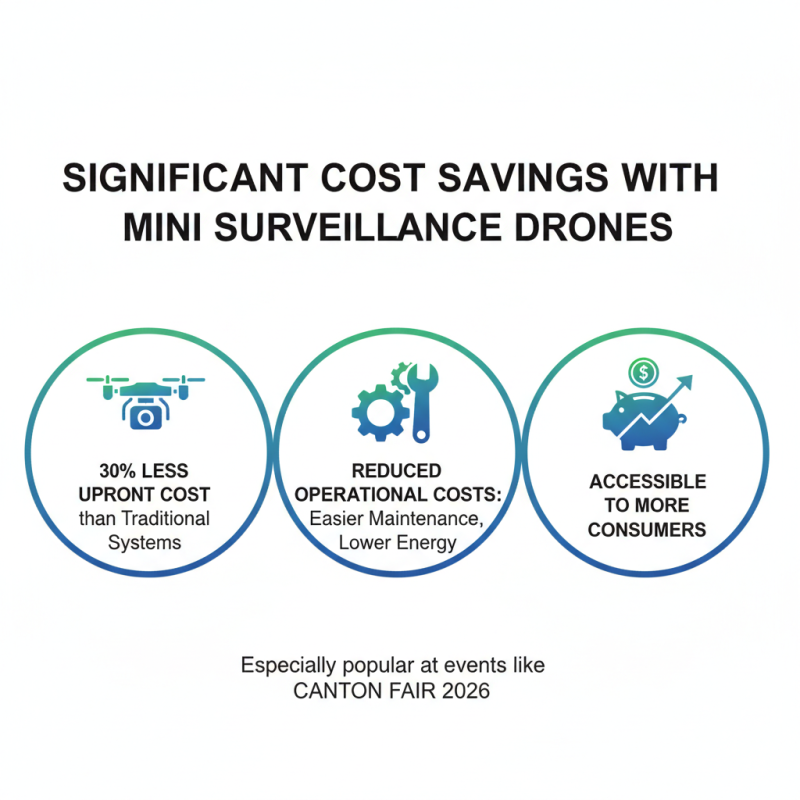
Mini surveillance drones have gained popularity, especially at events like the Canton Fair in 2026. These devices offer significant cost savings, making them accessible to a wider range of consumers. The average Mini Surveillance Drone costs nearly 30% less than traditional surveillance systems. Additionally, the operational costs are reduced; maintenance is easier, and the energy consumption is lower.
According to a recent industry report, the market for mini drones is projected to grow by 15% annually. This growth is driven by innovations in technology and increased demand for security solutions. Many organizations are shifting to these compact aerial vehicles for monitoring and surveillance. The Motor Mini Drone is particularly notable for its efficiency and compact design. They can be deployed quickly and cover areas that might be difficult for stationary cameras.
However, there are challenges. Many users find the learning curve steep. Training can take time and may require additional resources. Furthermore, while the quality of images continues to improve, lighting conditions can still affect performance. Buyers often need to consider their specific needs. Evaluating these factors can help ensure a sensible investment in a mini surveillance system.
The mini surveillance drone market is undergoing significant changes due to evolving regulatory trends.
According to a recent industry report, the global mini drone market is projected to reach
$6 billion by 2025. Governments are becoming more supportive of drone technology, often easing restrictions.
This shift allows businesses to adopt mini drones for surveillance in various sectors, including construction and security.
However, challenges remain. Many regulations differ by region, causing confusion. For example, some areas require specific certifications for drone pilots.
A survey revealed that about 45% of potential drone users cite regulatory uncertainty as a barrier to entry.
Smaller businesses struggle to navigate this complex landscape, which can lead to missed opportunities.
Despite these hurdles, the potential for mini surveillance drones is vast. Their ability to provide real-time video and analytics is a game changer.
They enhance security and operational efficiency, but users must remain vigilant about compliance.
As the market adapts, continuous monitoring of regulations will be crucial for the successful implementation of mini surveillance drones.
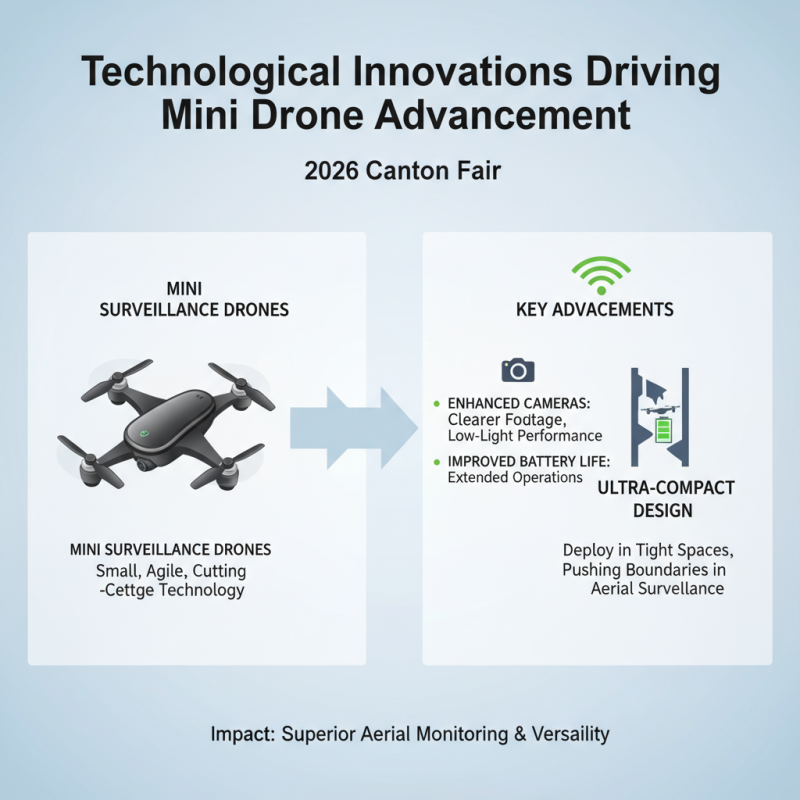
At the 2026 Canton Fair, mini surveillance drones are making waves. They are small, agile, and equipped with cutting-edge technology. These advancements push boundaries in aerial surveillance. Enhanced cameras and improved battery life are just a few examples. Users can expect clearer footage, even in low light. The ultra-compact design allows operators to deploy drones in tight spaces.
Technological innovations propel the mini drone market forward. AI-powered analytics enable real-time data processing. This feature offers insights previously unavailable to users. It’s revolutionary, yet there are still challenges. Operators may find it hard to manage multiple drones simultaneously. Training for effective use remains a pressing issue. Furthermore, the integration of a Mini Fpv Drone Kit simplifies user experience but still requires practice.
Many enthusiasts are eager to embrace these tools. Drone photography and videography see a notable boost. Users should carefully evaluate their needs, ensuring proper utilization. Balancing advanced features with the learning curve is essential. The excitement surrounding mini drones is palpable, but patience and adaptability will be key in harnessing their full potential.
The drone sector is expected to experience significant market growth in the coming years. Mini surveillance drones will be at the forefront of this expansion. These lightweight devices are becoming popular for various applications, including security and monitoring. People are increasingly interested in effective and discreet solutions for surveillance tasks.
Opportunities abound for manufacturers and developers. As technology advances, the potential for mini drones continues to grow. Improved battery life and enhanced camera capabilities will attract more users. However, the market faces challenges. Some still question the effectiveness of these smaller drones compared to larger models. Additionally, privacy concerns remain a critical issue.
Attending the Canton Fair in 2026 offers valuable insights into evolving trends. It is a chance to connect with industry leaders and experts. Observing innovations firsthand can inspire future designs. Engaging in discussions might reveal new opportunities, but be prepared for unexpected questions about ethics and regulations. Balancing innovation with responsibility is vital for capturing this growing market.
: Mini drones can access tight spaces and monitor areas traditional cameras cannot. They provide real-time footage efficiently.
Law enforcement agencies use mini drones to enhance public safety and deter crime without disrupting citizens.
Studies suggest that 70% of security professionals believe mini drones improve surveillance effectiveness.
Mini drones face limited battery life, restricted flight times, and the need for quick recharges.
Training ensures personnel can operate drones effectively, though it can be time-consuming and costly to implement.
Innovations include enhanced cameras, improved battery life, and AI-powered analytics for real-time data processing.
Ethical concerns arise from privacy issues, raising debates about the balance between security and individual rights.
Users may require practice to manage features efficiently, balancing excitement with the need for adaptability.
Operators may struggle with simultaneous management of multiple drones, highlighting a challenge in effective operation.
Users should assess their requirements carefully, considering how to utilize advanced features effectively while learning.
The article "Why Choose Mini Surveillance Drones at the 2026 Canton Fair?" highlights the increasing demand for Mini Surveillance Drones in global markets, driven by their advanced features and affordability. These drones have become essential tools in enhancing security and surveillance capabilities, offering significant cost savings compared to traditional monitoring methods.
Moreover, the piece discusses the regulatory trends that are shaping the adoption of Mini Surveillance Drones and the technological innovations that are propelling their development. With predicted market growth, these mini drones present vast opportunities for businesses across various sectors, making them a viable choice for attendees at the Canton Fair looking to leverage modern surveillance solutions.