China’s reconnaissance drone scene is pretty diverse, featuring well-established aerospace giants, specialized drone makers, and tech companies diving into commercial applications. In this guide, we’re taking a closer look at ten notable Chinese manufacturers and what their publicly available tech can do. Keep in mind, though, that the focus is on legit uses—stuff like inspecting infrastructure, monitoring the environment, doing surveys, assessing disaster areas, or emergency situations.
Some of the names you might hear include DJI, JOUAV, AEE, AVIC, China Aerospace Science and Technology Corporation, China Aerospace Science and Industry Corporation, NORINCO Group, EAVISION, XAG, and Tengden. Each one has its own game plan. Some concentrate on small, portable drones with automated imaging, while others develop longer-lasting platforms, high-end sensors, or integrated ground control systems. As a result, their products can really differ a lot when it comes to flight time, payloads, communication range, autonomy, and operating environments.
Now, no ranking out there is perfect, honestly. Public info might be incomplete—especially when it comes to aerospace companies. So, you shouldn’t take market visibility as an automatic sign of who's got the best tech. To really compare, you’d want to look at specs, independent tests, customer support, software reliability, manufacturing background, and how well they follow regulations. The real-world performance can vary a lot, too. For example, a drone great in an open field might not do so hot near tall buildings, mountains, or during rain or signal interference. Things like battery swaps, maintenance training, and data security totally impact actual operating costs—that’s stuff people often overlook.
We’re basing this overview on solid evidence, but do keep in mind that companies might change their product lines or strategies over time. So, before buying, make sure you double-check current certifications, export rules, support coverage, and the latest performance data. Bottom line: understanding the practical details is key if you want a drone that actually meets your needs.
Definition and Scope of Reconnaissance Drones in China
China’s reconnaissance drone sector covers aircraft, sensors, control software, and service support. Reconnaissance drones collect visual, thermal, mapping, or environmental data from a distance. They are not defined only by size or flight range.
In China, the scope includes fixed-wing, rotary-wing, and hybrid platforms. It also includes compact systems designed for inspection or emergency assessment. An Indoor Reconnaissance Drone belongs to this broader field when it gathers data inside warehouses, tunnels, factories, or damaged buildings. Typical evaluation points include image clarity, obstacle sensing, flight stability, battery life, and secure data handling. Practical testing matters more than impressive specifications. A drone may perform well outdoors but struggle near metal structures or weak lighting. That gap deserves attention.
Tips: Check the intended environment first. Request verified test data. Confirm operator training, privacy controls, and local aviation requirements. Ask how recorded images are stored and deleted. Small details matter. Claims should be independently reviewed when possible. Manufacturers serving this market may differ in engineering depth, support quality, and documentation. A top-ten comparison should therefore examine measurable performance, after-sales service, certification, and transparent limitations. The ranking can change as regulations, sensors, and battery technology develop.
Criteria for Ranking China’s Top 10 Manufacturers
China Top 10 Reconnaissance Drone Manufacturers
A credible ranking should measure evidence, not publicity. The evaluation can assign 30% to flight performance, including endurance, range, stability, and operation in poor weather. Payload integration deserves 20%, covering electro-optical cameras, thermal sensors, data links, and image clarity. These factors reflect the capabilities highlighted in Drone Industry Insights’ Global Drone Market Report 2024, which valued the worldwide commercial drone market at approximately US$30 billion.
Manufacturing reliability should receive 20%. Reviewers should examine documented production capacity, quality-control procedures, component traceability, and failure rates from field trials. After-sales support can represent 10%, including spare-part availability, software maintenance, operator training, and repair response times. The remaining 20% should assess cybersecurity, regulatory compliance, testing transparency, and export documentation. Public records matter more than impressive demonstrations.
SIPRI’s 2024 Arms Transfers Database is useful for market context, but it does not provide a complete manufacturer ranking for reconnaissance drones. That limitation requires careful interpretation. Independent testing, procurement records, technical filings, and customer feedback should be cross-checked. A polished brochure can hide weak endurance. No score is perfect. Weather, operator skill, and payload weight can change results significantly. The ranking should therefore publish its scoring method, evidence dates, and uncertainty levels. Credibility grows when weaknesses remain visible.
China’s Top 10 Reconnaissance Drone Manufacturers
China’s Top 10 Reconnaissance Drone Manufacturers should be assessed by capability, not visibility alone. A practical review examines flight endurance, electro-optical sensors, secure data links, weather resistance, and maintenance support. The Civil Aviation Administration of China reported more than 1.26 million registered civil unmanned aircraft in 2023. That scale suggests strong manufacturing depth, but registration numbers do not prove reconnaissance quality.
Independent market research also shows steady demand. Drone Industry Insights’ 2024 analysis estimated continued expansion in commercial drone services, especially mapping, inspection, agriculture, and public-safety applications. These fields reward stable imaging, accurate navigation, and reliable software more than impressive specifications. Some manufacturers offer compact aircraft for field teams. Others build fixed-wing systems with longer endurance and larger sensor payloads. Practical testing matters. A drone may advertise eight hours of flight, yet wind, camera weight, and battery temperature can reduce that figure sharply. Real results are often less tidy.
Buyers should compare documented flight hours, sensor resolution, repair cycles, operator training, and compliance records. The keyword Drone Rc Drone may attract searches, but professional users need clearer technical language. Factory claims also deserve verification through independent trials and published data. Ten companies may appear comparable on paper. They rarely perform equally in rain, weak connectivity, or dusty launch areas. That is where rankings become imperfect.
China’s Top 10 Reconnaissance Drone Manufacturers — Anonymized Market Profile
| Rank |
Anonymized Manufacturer Profile |
Primary Reconnaissance Segment |
Typical Platform Type |
Typical Endurance |
Typical Operational Range |
Payload Class |
Common Intelligence Function |
Market Position |
| 1 |
Profile 01 |
Medium-altitude, long-endurance surveillance |
Fixed-wing UAV |
More than 20 hours |
More than 1,000 km, depending on configuration |
Medium to heavy |
Wide-area imaging, maritime patrol, communications relay |
Strategic / government |
| 2 |
Profile 02 |
Long-range border and maritime reconnaissance |
Large fixed-wing UAV |
Approximately 15–30 hours |
Several hundred to more than 1,000 km |
Medium to heavy |
Electro-optical surveillance, synthetic-aperture radar integration |
Strategic / export |
| 3 |
Profile 03 |
Tactical battlefield reconnaissance |
Medium fixed-wing UAV |
Approximately 8–20 hours |
100–500 km |
Light to medium |
Day/night observation, target detection, route surveillance |
Defense / tactical |
| 4 |
Profile 04 |
Vertical-takeoff tactical intelligence |
Hybrid VTOL fixed-wing UAV |
Approximately 4–12 hours |
50–250 km |
Light |
Persistent observation in areas without prepared runways |
Defense / public safety |
| 5 |
Profile 05 |
Low-altitude tactical reconnaissance |
Small fixed-wing UAV |
Approximately 2–8 hours |
30–150 km |
Light |
Visual intelligence, terrain mapping, unit-level surveillance |
Tactical / institutional |
| 6 |
Profile 06 |
Close-range urban and infrastructure inspection |
Multirotor UAV |
Approximately 25–55 minutes per battery cycle |
Up to approximately 15 km |
Very light to light |
Close visual inspection, thermal imaging, incident response |
Commercial / public safety |
| 7 |
Profile 07 |
Coastal and inland-water surveillance |
Maritime-capable fixed-wing or VTOL UAV |
Approximately 6–18 hours |
100–600 km |
Light to medium |
Coastal monitoring, vessel detection, environmental observation |
Maritime / government |
| 8 |
Profile 08 |
High-altitude atmospheric and geographic survey |
Long-endurance fixed-wing UAV |
Approximately 10–24 hours |
Several hundred kilometres |
Light to medium |
Remote sensing, multispectral imaging, geological survey |
Civil / scientific |
| 9 |
Profile 09 |
Portable reconnaissance for emergency teams |
Small foldable multirotor UAV |
Approximately 20–45 minutes per battery cycle |
Up to approximately 8 km |
Very light |
Search and rescue, disaster assessment, temporary mapping |
Emergency / commercial |
| 10 |
Profile 10 |
Specialized low-signature reconnaissance |
Small electric fixed-wing or multirotor UAV |
Approximately 1–6 hours |
20–120 km |
Very light to light |
Discreet observation, perimeter monitoring, local mapping |
Specialized / institutional |
Note: Company and brand names have been intentionally omitted. Performance figures are representative publicly reported ranges for comparable reconnaissance-UAV categories; actual specifications vary by airframe, payload, battery or fuel configuration, communications link, weather, and mission profile.
Core Technologies and Product Capabilities
China Top 10 Reconnaissance Drone Manufacturers?
Core Technologies and Product Capabilities
China’s leading reconnaissance drone manufacturers are increasingly judged by engineering depth, not airframe appearance. Their core work combines flight control, stable imaging, secure data links, and efficient power management. In field trials, operators watch how quickly a drone launches, holds position, and returns safely in changing wind. High-quality systems use redundant navigation, obstacle sensing, and encrypted communications. These features matter near mountains, coastlines, and industrial zones. Small details matter.
Product capability also depends on payload design. Electro-optical cameras should provide clear daytime imagery, while thermal sensors support night inspection and emergency assessment. Gimbals need smooth stabilization during slow turns. Some platforms support mapping, automated route planning, and live video analysis, but human approval should remain central. Sar Drone=Search And Rescue Drone capability requires dependable location sharing, loudspeaker options, and accurate low-light detection. Battery swapping can reduce downtime, although it adds cost and logistics.
A credible manufacturer should document flight endurance, weather limits, maintenance intervals, and software update policies. Independent testing is valuable, especially when published figures use ideal conditions. No platform is perfect. A careful buyer checks pilot training, repair access, data governance, and local aviation rules before purchase. Claims about artificial intelligence also deserve scrutiny; recognition accuracy can fall in rain, glare, or crowded scenes. That weakness needs honest reporting.
Military, Security, and Civilian Reconnaissance Applications
China’s top ten reconnaissance drone manufacturers are often assessed through mission performance, production discipline, and after-sales support. Military users may require encrypted communications, stable navigation, thermal imaging, and reliable performance in difficult weather. Security teams usually prioritize rapid deployment, quiet operation, and clear evidence collection. Civilian operators need different tools, including mapping cameras, agricultural sensors, and infrastructure inspection systems.
Field experience matters more than attractive specifications. A useful evaluation examines flight endurance, sensor accuracy, control range, maintenance access, and operator training. It should also review testing records, product documentation, safety procedures, and compliance with local aviation laws. A drone may appear capable in a demonstration, yet perform poorly near buildings, power lines, or heavy rain. Small details matter.
No ranking is permanently correct. Supply chains change, software updates introduce unexpected weaknesses, and real missions expose design limits. That is why independent trials should accompany manufacturer claims. Operators can record battery temperatures, image clarity, signal stability, and recovery time after minor faults. Civilian users may value simple workflows more than advanced features. Security teams may need stronger data protection. Military organizations require stricter procurement reviews and controlled operation. The best manufacturers combine engineering depth with responsible support, but even experienced teams should question optimistic performance figures.
China's Reconnaissance Drone Manufacturing Landscape
The chart compares representative endurance benchmarks for reconnaissance UAV application classes commonly served by Chinese manufacturers. Values are approximate open-source class-level benchmarks rather than company rankings or brand-specific specifications.
Market Trends, Regulations, and Future Development
China’s reconnaissance drone sector is moving from prototype showcases toward repeatable field operations. MarketsandMarkets estimates the global military drone market could reach about USD 33 billion by 2028, supported by surveillance demand. China’s manufacturing advantage remains visible in batteries, compact sensors, and rapid production cycles. Yet market estimates vary widely. Some reports combine civilian and defense aircraft, weakening direct comparisons.
Regulation now shapes product design as much as flight performance. Operators must consider airspace permissions, remote identification, data security, export controls, and pilot qualifications. Civilian systems also face stricter privacy expectations near airports, ports, and residential areas. The Civil Aviation Administration of China continues refining unmanned aircraft rules, while national data-security requirements influence storage and transmission choices. A useful Drone Kit needs clear documentation, encrypted links, geofencing, and repair support. More cameras do not automatically create better intelligence.
Tips: Buyers should test endurance in wind, signal loss, and low temperatures. Ask for measurable detection ranges, not promotional wording. Check software-update procedures before purchase. Keep flight logs. They expose recurring faults. Future development will likely favor modular payloads, edge-based image processing, and safer coordination between multiple aircraft. However, autonomy still needs human review. Field conditions are messy, and published specifications can look better than real operations. That gap deserves more honest reporting.
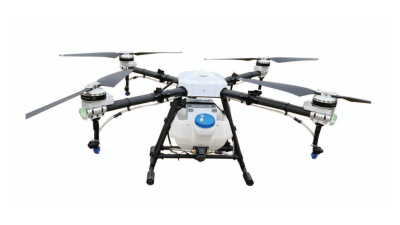
20L Agricultural Drone Spraying Tank SAD20: Efficient Crop Protection from Above
The 20L Agricultural Drone Spraying Tank SAD20 is designed to make crop protection faster, safer, and more efficient. With a 20-liter tank, it can cover large fields in less time than traditional pesticide sprayers, helping farmers respond quickly during critical periods of pest and disease control. Its aerial operation supports even spraying across crops, including areas that may be difficult for ground equipment to reach.
Compared with conventional spraying methods, the drone can reduce water and crop protection product consumption through precise application and adjustable flow control. Operators can remain away from direct contact with spray liquids, improving workplace safety and helping reduce unnecessary chemical residue on crops when used according to approved product labels and local agricultural regulations. The drone’s efficient flight and spraying system also reduce the labor and time required for routine field operations.
Before delivery, each agricultural spraying drone undergoes rigorous testing to check flight stability, spraying performance, tank reliability, and overall operating safety. The 20L capacity is suitable for farms seeking a balance between payload and maneuverability, while larger tank options, including 30L, 40L, and 50L models, can support different field sizes and operational requirements.
FAQS
: It is an aircraft that collects visual, thermal, mapping, or environmental data remotely. It may use fixed-wing, rotary-wing, or hybrid designs. Size alone does not define it.
They can inspect warehouses, tunnels, factories, fields, and damaged buildings. Indoor flights need strong obstacle sensing and stable positioning. Metal structures and weak lighting can reduce performance.
Compare image clarity, sensor range, flight stability, battery life, and data security. Also review weather resistance, repair cycles, training, and software support. More cameras do not guarantee better results.
Advertised endurance is usually measured under controlled conditions. Wind, payload weight, battery temperature, and repeated maneuvers may reduce it. Real flights are messier.
Test it in wind, low temperatures, weak signals, and dusty launch areas. Request verified data for detection range and battery performance. Keep detailed flight logs. They reveal recurring faults.
Look for encrypted links, controlled storage, secure updates, and clear deletion procedures. Confirm who can access recorded images. Privacy matters near homes, airports, and ports.
No. Registration totals show market scale, not reconnaissance performance. A capable system still needs reliable sensors, software, maintenance, and trained operators. Numbers can mislead.
Future systems may use modular sensors, onboard image processing, and safer multi-aircraft coordination. Human review should remain important during field operations. Autonomy is not flawless.
Conclusion
This article presents a structured overview of China’s top 10 reconnaissance drone manufacturers, focusing on the definition, scope, and practical value of modern aerial observation systems. The ranking considers research and development strength, flight performance, imaging and sensing capabilities, production quality, reliability, after-sales support, innovation, and compliance with applicable regulations. It also examines how these manufacturers contribute to the development of fixed-wing, multirotor, and hybrid platforms designed for efficient data collection and remote monitoring.
The discussion covers core technologies such as high-resolution cameras, thermal sensors, navigation systems, autonomous flight assistance, secure data transmission, and intelligent image analysis. Reconnaissance Drone applications are explored across infrastructure inspection, environmental monitoring, emergency response, agriculture, public safety, and other lawful civilian and security-related fields. Finally, the article reviews market trends, regulatory responsibilities, privacy considerations, and future opportunities, highlighting the importance of safe operation, responsible data management, technological cooperation, and sustainable industry development.