You know, with tech advancing so quickly these days, it’s no surprise that we’re seeing cool new stuff like VTOL (Vertical Take-Off and Landing) drones popping up all over the place. As more folks get into unmanned aerial vehicles, companies around the globe are racing to meet the different needs of industries—from farming to package delivery. By 2026, it’s more important than ever to get a good grip on who the top custom ODM VTOL drone factories actually are.
These factories are really pushing the envelope when it comes to drone design—focusing on precision, flexibility, and all that good stuff. They serve a bunch of different sectors, and each one brings its own tech tricks and expertise to the table. But honestly, with so many options out there, choosing the right factory isn’t exactly a walk in the park.
Big names like EHang and DJI have already made a solid name for themselves, but there are newer players still trying to find their footing. Of course, price and quality are always balancing acts—you want something reliable without breaking the bank. Investors and companies alike are on the lookout for dependable partners, but it can be a bit of a gamble figuring out who’s legit. Taking a careful look at all these factors can really help you make smarter decisions in the fast-moving world of VTOL drones.
2026 Overview of VTOL Drone Market Growth and Trends
The VTOL drone market is poised for significant growth through 2026. Emerging technologies are enabling these aircraft to operate in diverse environments. They are gaining popularity due to their vertical takeoff and landing capabilities. This opens up new applications in urban air mobility, logistics, and disaster response.
Market trends show increased investment in research and development. Many companies are exploring hybrid designs, combining rotorcraft and fixed-wing elements. This approach enhances efficiency and extends flight range. However, understanding regulatory challenges remains critical. Regulatory frameworks are often slow to adapt, creating uncertainty for manufacturers.
User experience drives the need for intuitive controls and software integration. As the technology matures, the demand for user-friendly interfaces will grow. Even with advancements, there are still operational hurdles to overcome.
Reliability during adverse weather conditions is a key concern. Identifying solutions to enhance durability and safety is a continuous process. The journey of the VTOL drone market is filled with potential, yet practical challenges need attention.
Key Features and Innovations in Custom ODM VTOL Drones
Custom ODM VTOL drones are rapidly evolving, integrating innovative features that enhance operational capabilities. Key advancements include improved battery technology, advanced materials, and AI-driven navigation systems. Industry reports highlight that the global VTOL drone market is projected to grow to $10 billion by 2026, reflecting increasing demand in various sectors such as delivery, surveillance, and agriculture.
These drones now offer enhanced payload capacities and increased flight autonomy. Manufacturers are focusing on adapting designs to meet specific customer needs. According to a recent analysis, lightweight composites reduce overall weight and improve flight efficiency. The flexibility of ODM (Original Design Manufacturer) solutions allows clients to tailor specs for unique applications, driving greater efficiency.
**Tips:** When choosing a custom ODM VTOL drone, consider the intended use. Some designs may not be suitable for all environments. Research various options and seek manufacturers with proven expertise. A poorly chosen drone can result in operational delays and increased costs. Always ask for performance data and case studies.
2026 Top Custom ODM VTOL Drone Factories You Need to Know
| Factory Location |
Production Capacity (Units/Year) |
Key Feature |
Innovation |
Client Base |
| North America |
5,000 |
Advanced AI Navigation |
Autonomous Flight Optimization |
Defense, Agriculture |
| Europe |
3,500 |
Vertical Takeoff Technology |
Energy Efficient Propulsion |
Logistics, Surveillance |
| Asia |
7,000 |
Hybrid Drone Systems |
Multi-mission Capability |
Emergency Services, Environmental Monitoring |
| Middle East |
2,000 |
Long Range Capabilities |
Real-time Data Processing |
Military, Oil & Gas |
Top 5 VTOL Drone Factories Leading the ODM Market in 2026
The vertical take-off and landing (VTOL) drone market is rapidly evolving. By 2026, the demand for custom ODM (Original Design Manufacturer) VTOL drones is expected to skyrocket. Recent industry reports indicate that the global VTOL drone market could reach over $10 billion by 2026. This growth showcases the importance of innovative manufacturing processes and reliable technology in this competitive sector.
Several factories are pushing boundaries in design and efficiency. These top five ODM manufacturers are recognized for their robust engineering and customer-centric solutions. The increasing focus on automation and AI integration enhances their production capabilities. Yet, challenges remain. Factories must continuously adapt to regulatory changes and technological advancements. Understanding market needs is essential to staying relevant.
Tips: When selecting a factory, consider their experience and technological innovation. Check their track record for reliability and product quality. Engage with their prior clients to gain insights into their performance and support systems. Remember, innovation should not come at the cost of safety. As the industry grows, so do the ethical implications of drone technology. Prioritize manufacturers that adhere to stringent safety standards.
Impact of Regulatory Changes on VTOL Drone Manufacturing
Regulatory changes are shaping the VTOL drone manufacturing landscape. New regulations, such as the FAA's Remote ID rule, aim to enhance safety in drone operations. This has prompted manufacturers to adapt quickly. According to a 2023 report by the Drone Industry Insights, 72% of companies are adjusting their designs to meet regulatory standards. This rush for compliance may impact innovation, as firms prioritize meeting requirements over exploration of advanced technologies.
Safety concerns drive many regulations. The European Union Aviation Safety Agency has implemented strict guidelines to ensure public safety. This creates challenges for manufacturers. Adjusting designs often leads to increased production costs. A report from the Association for Unmanned Vehicle Systems International suggests that compliance-related expenses could rise by as much as 15%. Some manufacturers may struggle to balance cost and innovation.
Adaptation is crucial for growth. Companies can leverage regulatory changes as opportunities. The push for compliance can foster collaboration among manufacturers, regulators, and technologists. By embracing these regulatory challenges, the VTOL drone industry may see new standards for safety and efficiency. The path is not easy, but it can lead to more robust and reliable products in the long term.
Comparison of Manufacturing Capacities among Leading VTOL Drone Factories
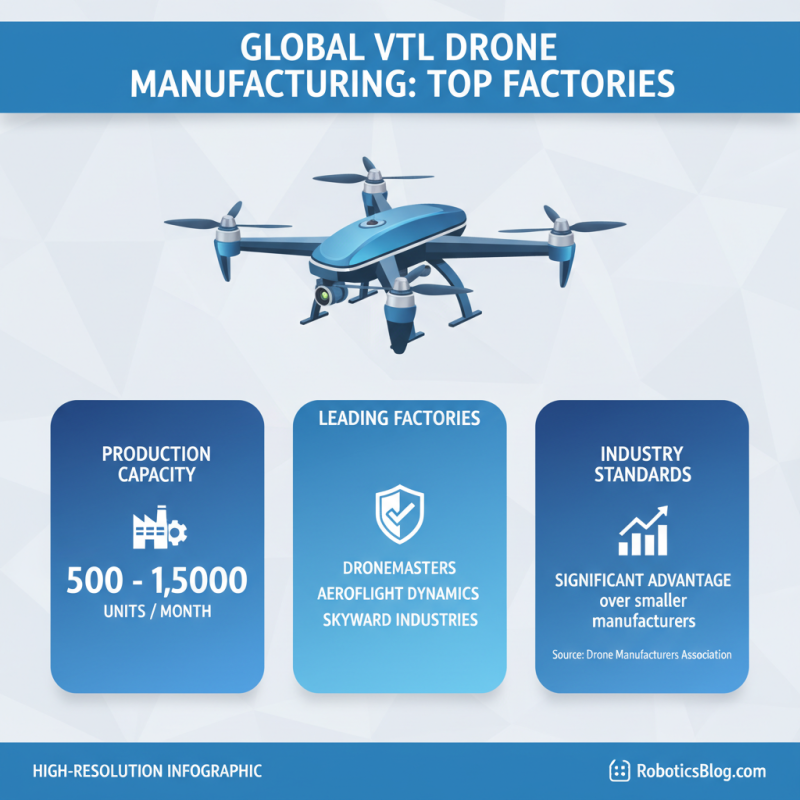
The landscape of VTOL drone manufacturing is rapidly evolving. As identified in several industry reports, the top factories exhibit distinct capabilities. For instance, data from the Drone Manufacturers Association indicates that leading factories can produce between 500 to 1,500 units monthly. Such production rates demonstrate significant manufacturing capabilities compared to smaller entities.
However, varying degrees of expertise among manufacturers can lead to inconsistencies in quality. Many manufacturers are still navigating the challenges of scaling operations effectively. Tips for aspiring buyers include assessing production timelines and quality assurance protocols. Understanding these factors can help ensure a reliable product.
In addition to capacity, companies must embrace design innovation. According to a 2023 market analysis, design efficiency contributes to 30% of overall success in the VTOL market. While some companies excel in manufacturing, their designs might still require improvement. Future trends indicate a need for adaptability, pushing companies towards sustainable designs and materials that cater to evolving customer demands.
Technology Advancements Driving Customization in VTOL Drones
The rapid evolution of Vertical Take-Off and Landing (VTOL) drones is reshaping multiple industries. A recent industry report reveals that the global VTOL market is projected to grow at a CAGR of 25% through 2026. This explosion of interest is largely due to technological advancements that enhance customization options. Manufacturers can now tailor drones to specific applications, ranging from surveillance to cargo transport.
One key driver of this trend is the integration of artificial intelligence (AI) into drone systems. AI allows for real-time data analysis, making drones smarter and more adaptable. For example, drones can be programmed to optimize flight paths based on weather conditions. This level of precision is a significant improvement over earlier models and enhances operational efficiency. However, the challenge remains in ensuring reliability amidst these advancements. Drones must not only be capable but also trustworthy in various environments.
Another influential factor is the growing demand for automation in various sectors. Businesses seek to reduce costs and improve service delivery. Customized VTOL drones can meet these needs by facilitating faster logistics and efficient monitoring. Yet, manufacturers face hurdles in balancing customization with production constraints. As the industry progresses, these tensions will require careful consideration to ensure sustainable growth and innovation.
Future Outlook: Market Projections for VTOL Drones by 2030
The VTOL drone market is poised for significant growth by 2030. A recent report from ResearchAndMarkets indicates a compound annual growth rate (CAGR) of 18% over the next seven years. This indicates robust demand driven by advances in technology and increasing applications in various sectors. From logistics to agriculture, the uses for VTOL drones are expanding rapidly.
However, challenges remain. Regulatory hurdles and safety concerns can stall progress. The integration of VTOL drones into existing air traffic systems poses complexities that require careful planning. As manufacturers innovate, they must also address public perception and environmental impact. Increased scrutiny on battery disposal and operational noise can affect adoption rates.
Tips: Consider keeping up with the latest industry guidelines. Understanding the regulatory landscape can save time and resources. Additionally, pursue partnerships with tech firms for improved innovation. This collaboration can mitigate risks while enhancing product offerings. Recognizing potential pitfalls early could lead to more sustainable growth strategies.
FAQS
: Key advancements include improved battery technology, advanced materials, and AI-driven navigation systems.
The market is projected to grow to $10 billion by 2026.
Some designs may not suit all environments, which can lead to operational issues.
Always ask for performance data and case studies to understand capabilities.
They reduce overall weight, improving flight efficiency and enhancing payload capacities.
Experience indicates reliability and quality, which are crucial for successful operations.
They must adapt to regulatory changes and technological advancements continually.
As the industry grows, ethical considerations become more significant, influencing design and usage.
Adhering to stringent safety standards should be a top priority throughout the process.
Yes, it can lead to delays and increased costs, emphasizing the need for careful selection.
Conclusion
The 2026 VTOL drone market is poised for significant growth, driven by key innovations and an increasing demand for custom ODM solutions. The article outlines the major trends shaping the industry, including advancements in technology that enable greater customization and improved performance of VTOL drones. Furthermore, it highlights the top five factories leading the ODM market, alongside a comparison of their manufacturing capacities, which play a critical role in fulfilling the evolving requirements of diverse applications.
Additionally, the impact of regulatory changes on VTOL drone manufacturing is examined, emphasizing how compliance is crucial for sustaining market momentum. Looking ahead, projections indicate a robust growth trajectory for VTOL drones, with expectations of further technological developments and expanding market opportunities by 2030. This overview provides valuable insights for stakeholders interested in the dynamic landscape of VTOL drones.