
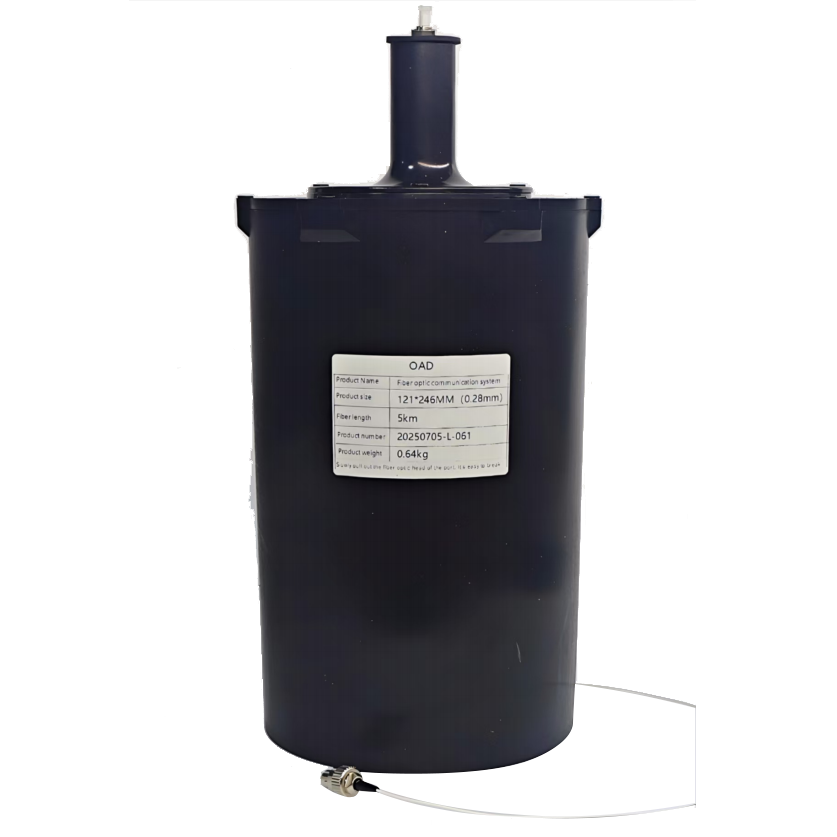
20km Fiber Optic Cable Kit for FPV Drones-SFC269
PRODUCT FEATURES:
1.Ultra-Low Attenuation Fiber (G.657.A2)
At 20km, signal loss becomes a major factor. It adopts high-purity single-mode fiber to ensure that even at the maximum 30km extension, the 4K video feed remains crisp with near-zero latency, as the light signal experiences minimal "fading" over the long distance.
2.Micro-Diameter Fiber Coating
Standard fiber is too bulky for a 20km spool on a drone. Use of 80μm or 125μm "thin-clad" fiber with a specialized polyimide or acrylate coating. Drastically reduces the volume and weight of the spool, allowing 30km of line to fit into a canister small enough for a medium-to-large FPV frame.
3.Active Tension Control & Payout Sensors
A 20km flight involves varying speeds and wind resistance. An intelligent payout mechanism that monitors the "pull" from the drone. Prevents "over-spooling" (where the line comes out too fast and tangles) or "under-spooling" (where the line is too tight and snaps). It adjusts the friction or motor speed in real-time.
4.High-Speed Rotary Joint (FORJ)
A premium Single-Channel Fiber Optic Rotary Joint allows the internal spool to spin at high RPMs to keep up with a fast-moving FPV drone while maintaining a perfect, flicker-free optical connection.
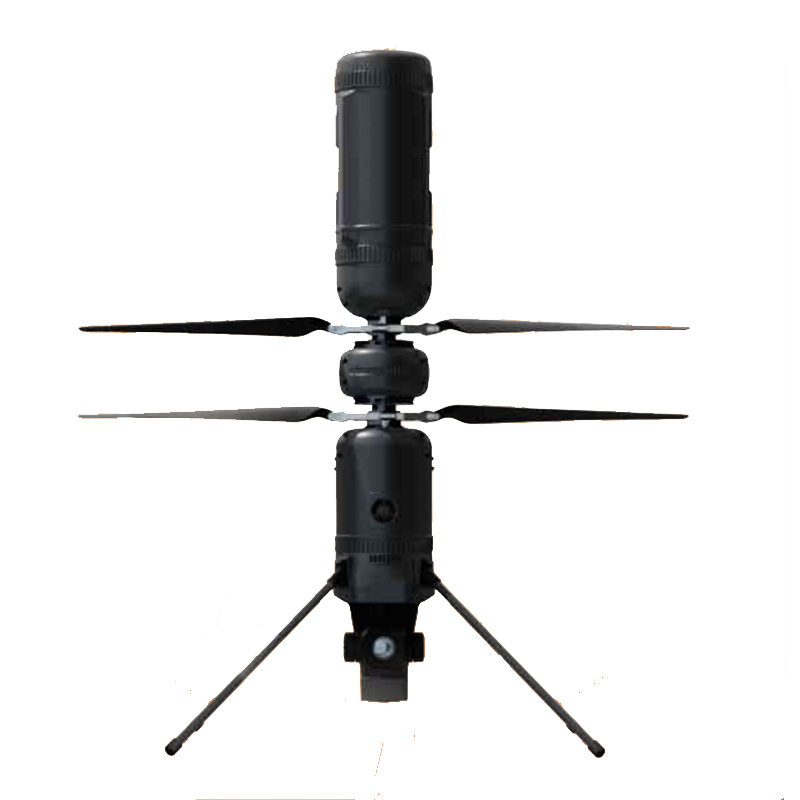
5.Aerodynamic Carbon-Fiber Canister
A cylindrical housing made of reinforced carbon fiber which minimizes air resistance and protects the delicate glass fiber from the drone's propeller wash and environmental debris.
6."Invisible" Electronic Signature
Non-emissive data transmission. Unlike traditional FPV systems (which broadcast at 1.2GHz, 2.4GHz, or 5.8GHz), a fiber-tethered drone emits zero RF signals. It is undetectable by radio frequency scanners and immune to all forms of electronic jamming.
7.Emergency Jettison Mechanism
A remote-triggered "line-cut" or "quick-release" system. If the fiber gets snagged on a tree or building, the pilot can instantly sever the tether to save the drone, transitioning to a backup short-range radio link to fly home.
PRODUCT PARAMETERS:
|
Model |
SFC269 |
||
|
Product name |
20KM Fiber Optic Cable kit for FPV Drones |
||
|
Type of fiber optic cable |
G657A2 |
||
|
Material of sheath |
High strength resin |
||
|
Length of cable |
20000m |
||
|
Outer diameter of cable |
0.26mm±0.1 |
||
|
Color of tight-buffered |
Invisible and transparent |
||
|
Unit weight |
80g/km |
||
|
Fiber optic cable tension |
60N |
||
|
Working temperature |
-40°~85°C |
||
|
Optical interface |
FC/FC(Standard) |
||
|
Optical fiber attenuation parameters |
|||
|
Wavelength |
1310nm |
1550nm |
|
|
Standard value |
≤0.35dB/km |
≤0.25dB/km |
|
|
Typical value |
0.329dB/km |
0.185dB/km |
|
FAQ:
1.Q: Why would a drone operator choose a fiber optic spool over a traditional Radio Frequency (RF) link?
A: Fiber optic links are preferred in RF-denied environments where electronic jamming or heavy interference is present. Because the data travels via light through a physical cable, the connection is immune to EMI (Electromagnetic Interference) and is virtually unhackable, making it ideal for secure government, industrial, or forest patrol missions.
2.Q: What are the main limitations to consider when integrating a fiber optic canister onto a UAV?
A: The two main constraints are weight (payload) and operational range. The drone must be powerful enough to carry the weight of the spool and the cable itself. Furthermore, the maximum flight distance is physically limited by the length of the fiber wound onto the spool, typically ranging from 1km to 20km depending on the drone's size.